
Is the Dance of the Seven Veils performed nude in Richard Strauss’s Salome? Usually not, but in a few landmark productions it is, most famously in Peter Hall’s staging with Maria Ewing, filmed at the Royal Opera House, Covent Garden in 1992, where Salome ends the dance completely unclothed. That choice made the production a reference point in every discussion of Salome, nudity and opera, and it works because the dance is about power, rejection and revenge, not spectacle.
Strauss shocked audiences with Salome from its premiere in 1905, and it remains one of his most radical works. This guide explains where the story comes from, what the Dance of the Seven Veils means dramatically, and why Ewing’s performance is still talked about.
- Salome, Royal Opera House production with Maria Ewing (DVD)
- Salome in Full Score (Dover Opera Scores)
What is Richard Strauss’s Salome about?
Salome is a one-act opera by Richard Strauss, set to a German translation of Oscar Wilde’s French play Salomé. It premiered in Dresden in 1905 (overview).
The story takes place at the court of Herod. Salome is the daughter of Herodias and the stepdaughter of Herod, who has married his brother’s wife and now openly lusts after his stepdaughter. Imprisoned in a cistern below the terrace is the prophet Jokanaan (John the Baptist), who denounces Herodias. Salome becomes obsessed with him, he rejects her, and she takes revenge in the most horrifying way the drama allows: after dancing for Herod, she demands Jokanaan’s head on a silver platter.
Is Salome’s story really in the Bible?
Only in outline. The Gospels tell of Herodias’s daughter dancing for Herod and asking, at her mother’s prompting, for the head of John the Baptist. They do not even name her; the name Salome comes from later historical writing. There is no description of seven veils, and in the biblical version the motive is Herodias’s, not her daughter’s.
Wilde changed all of that. In his play, Salome wants Jokanaan herself, and the execution is her revenge for being rejected. Strauss kept that psychology. This raises the question the original Bible story never answers: what did the daughter want? Strauss’s answer is a teenage princess who has never been told no, and who cannot bear it when the prophet refuses even to look at her.

Who are Herod, Herodias and Jokanaan in the opera?
Herod is the tetrarch: powerful, superstitious, lecherous and increasingly unstable. He cannot stop looking at Salome, and that weakness is what she uses against him.
Herodias is Salome’s mother and Herod’s wife. She despises Jokanaan, who condemns her marriage, and she is wary of Herod’s desire for her daughter. When Salome finally asks for the prophet’s head, Herodias is delighted.
Jokanaan is the moral voice of the opera, the one character who refuses to be drawn into the court’s decadence. His rejection of Salome is the spark for everything that follows.
The triangle is the engine of the drama. Herod wants Salome, Salome wants Jokanaan, and Jokanaan wants nothing to do with either. The dance is where those desires collide.
Is the Dance of the Seven Veils nude?
The score does not require it. Strauss titles the number “Dance of the Seven Veils,” a phrase taken from Wilde’s stage direction, but neither says how much is removed. Productions handle it in many ways: abstract choreography, a body double for the dance, symbolic veils, or a gradual removal of costume that stops well short of nudity. For a long time, most sopranos ended the dance with something left on, however thin.
The Peter Hall staging went further. Hall first directed Ewing in the role in 1986 at the new Music Center Opera in Los Angeles, and the production later traveled to the Royal Opera House. The 1992 Covent Garden performances were filmed and released on DVD by Opus Arte, whose listing describes Ewing as leaving “nothing to the imagination” in the dance and carries a warning for nudity and violence (Opus Arte).

How does Maria Ewing’s Dance of the Seven Veils work dramatically?
In this version the “veils” become layers of costume that Salome removes one by one, keeping the sequence of seven. What makes it striking is how little it plays as seduction. Ewing dances slowly, with almost no flirtation. Her one teasing gesture is aimed not at Herod but at Jokanaan’s prison, where she waves a discarded layer above his cage. He does not react, and that silence is the point. The whole dance is fueled by his rejection.
The slow build toward the final layer is gripping, but not because it is erotic. You watch Herodias’s alarm grow as her daughter agrees to dance for Herod, and you watch Salome turn Herod’s weakness into the only tool that can get her what she wants: the death of the one man who refused her. By the time the dance ends, the audience understands how far she is willing to go.
The nudity, staged without tricks and shaped by lighting, lands as exposure rather than display. Salome has given Herod everything he wanted to see. Now she will name her price. Read that way, the moment is a transaction, and it makes the demand that follows even colder.
Why is the dance about power, rejection and revenge?
Because of what Salome does next. She traps Herod with an oath he made in front of his court, so refusing her would cost him face. He offers jewels, peacocks, half his kingdom. She refuses all of it and insists on one reward: the head of Jokanaan on a silver platter.
Herod, blinded by desire, is slow to realize that the girl he has been watching is more dangerous than her mother. The long final scene, in which Salome sings to the prophet’s severed head, reveals the twisted logic behind everything: she wanted him, he refused, and she would rather have him dead than not have him at all. In this production that monologue is handled with the same slow-burn intensity as the dance, so the horror builds steadily to the final command from Herod.
Seen that way, the dance is not an interlude. It is the turning point where Salome stops asking and starts taking.

Who sang in the Covent Garden Salome with Maria Ewing?
A controversial staging still has to deliver the singing, and this one does. The principal cast, conducted by Edward Downes with the Orchestra of the Royal Opera House, is listed in the recording details:
- Salome: Maria Ewing
- Jokanaan: Michael Devlin
- Herod: Kenneth Riegel
- Herodias: Gillian Knight
- Narraboth: Robin Leggate

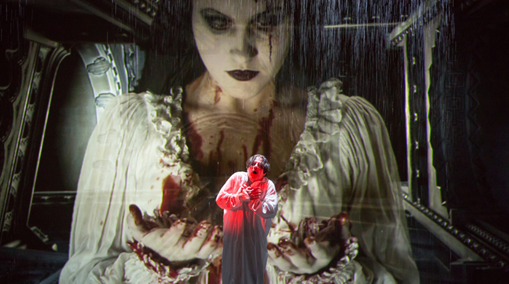
Michael Devlin gives the bleakest score in the repertoire its one positive voice as Jokanaan. Dressing him in a small piece of animal skin fits the biblical image of John preaching in the desert. It also quietly prepares the audience for the frankness to come later. His pale, powdery makeup suggests how long he has been held in his cell, and it gives Salome something strange to praise when she tries to win him.
Gillian Knight brings a rich mezzo and sharp acting to Herodias, swinging between irritation and triumph. When Salome finally asks for the head, Herodias’s joy feels earned. She sounds like the she-demon that Herodias is often described as.
Kenneth Riegel sings Herod with a sharp, cutting tenor that suits the character’s paranoia, lechery and madness. His performance goes close to over-the-top, with bulging eyes and frantic energy, but in a role like Herod that excess is almost expected.

Why is Maria Ewing’s Salome considered a landmark?
Salome is one of the hardest roles in opera to cast. The singer has to suggest a very young princess, hold the stage with enough charisma that every character is drawn to her, ride a huge Strauss orchestra, and act the character’s slide from spoiled child to something monstrous. Ewing meets all of those demands.
Acting Salome is not about the dance alone. Once the dance is over, the singer still has to hold the audience through the long final scene. Ewing’s singing carries Salome from demanding brat to twisted soul, and she stays in character from her first entrance to the final kiss of the severed head. Unlike Riegel’s Herod, she never goes over the top. Her near-stoic expression, which rarely changes even during the dance, suits a princess frozen by her first taste of rejection.
That combination of frankness and control is why this staging remains a reference point. It showed that full nudity in the dance could be dramatically serious rather than sensational.
For comparison with other productions that used nudity as commentary, see our guides to Calixto Bieito’s naked operas and nudity in Les Contes d’Hoffmann, plus our wider look at how modern is tolerable in opera. Ewing is not the only singer who went all the way: our guide to operas with nudity covers Karita Mattila’s 2004 Met Salome and four other famous productions.
Frequently asked questions
Is Salome always performed nude?
No. Most productions stop short of full nudity or use stylized choreography. Full nudity at the end of the dance, as in Maria Ewing’s performance, is the exception.
What are the seven veils in Salome?
They come from Oscar Wilde’s play rather than the Bible. On stage they can be literal veils, layers of costume or purely symbolic.
Why does Salome want John the Baptist’s head?
In Wilde’s play and Strauss’s opera, it is revenge: Jokanaan rejected her. In the Bible, the request comes from her mother, Herodias.
When was Maria Ewing’s Salome filmed?
At the Royal Opera House, Covent Garden in 1992, conducted by Edward Downes. It was later released on DVD.
Is Salome suitable for younger viewers?
The opera contains violence and adult themes, and the Ewing recording carries a warning for nudity and violence, so it is best suited to adult audiences.

You can own the DVD of this production through Amazon. Simply click here to get your own copy. As an Amazon Associate, Musicals On Line may earn a commission from qualifying purchases at no extra cost to you. While you’re at it, like our Facebook page, MusicalsOnline.com, and follow us on Twitter @musicalsnews. Thanks for reading.