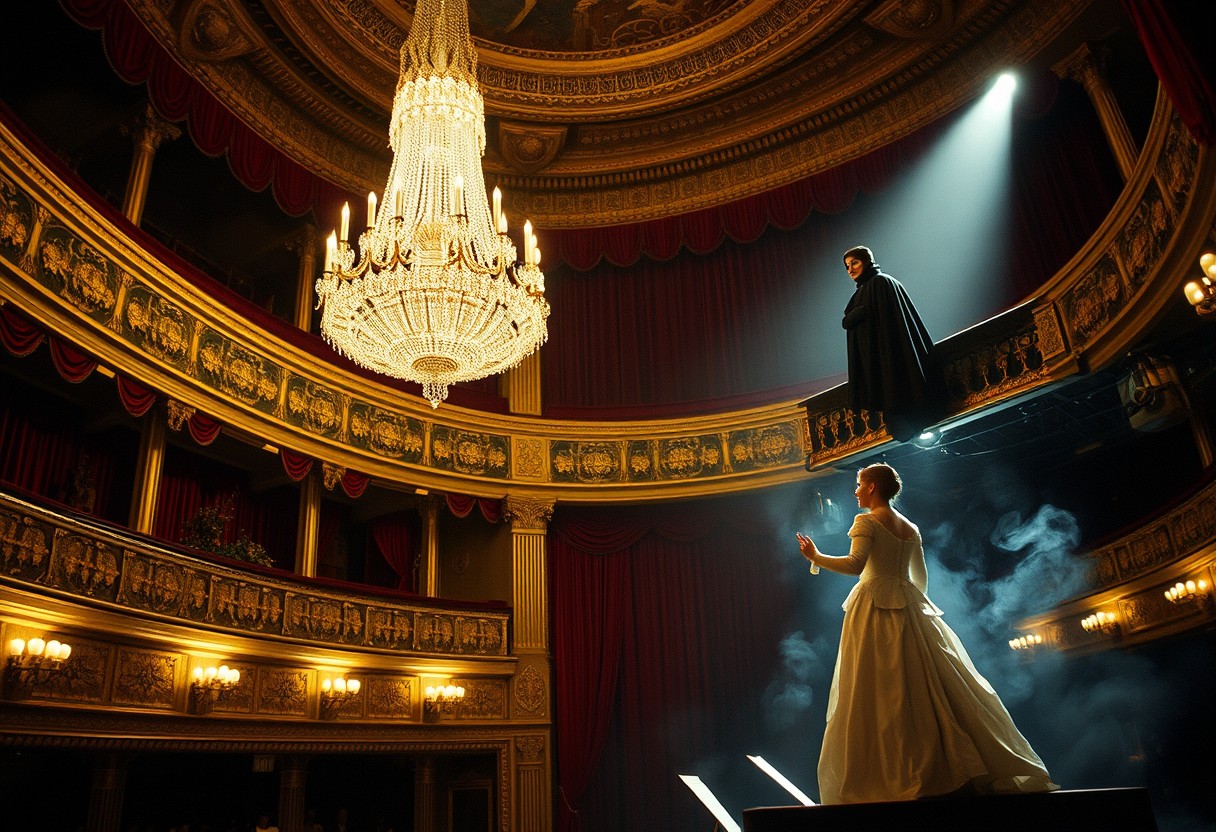









You step into a world transformed when the lights dim and the junkyard set comes alive, because Cats redefined musical theatre with its bold fusion of poetry, dance, and avant-garde staging. Based on T.S. Eliot’s whimsical verses and brought to life by Andrew Lloyd Webber’s inventive score, the musical emerged as a groundbreaking spectacle that captivated audiences from its 1981 London premiere.
Key Takeaways:
- The musical originated from T.S. Eliot’s 1939 poetry collection *Old Possum’s Book of Practical Cats*, which offered whimsical, character-driven verses rather than a traditional narrative, challenging the creators to build a story from fragmented literary sketches.
- Andrew Lloyd Webber developed the score over several years, initially writing songs for a proposed television special that never aired, and later adapting them into a stage production that premiered at London’s New London Theatre in 1981.
- Directed and choreographed by Gillian Lynne, the show redefined stage movement with its feline-inspired physicality, requiring performers to embody cat-like gestures and postures, a stylistic choice that became a defining feature of its long-running success.
T.S. Eliot and the Literary Source Material
T.S. Eliot’s Old Possum’s Book of Practical Cats began as a series of whimsical poems exchanged in letters with friends and family. Published in 1939, the collection reveals Eliot’s playful side, contrasting sharply with his more austere modernist works. You encounter feline characters defined by distinct personalities and eccentric names, forming the narrative backbone of the musical. The poems’ rhythmic inventiveness and dry wit provided fertile ground for adaptation.
Sending money abroad?
Wise makes international transfers cheaper than most banks — real exchange rates, low fees, and a free debit card option in many countries.
Need social posts without the grind?
Holo turns one idea into reels and photo posts with AI — useful if you promote shows, reviews, or fan content and want more output with less editing time.
Adapting Old Possum’s Book of Practical Cats
Eliot’s original poems lacked a traditional plot, presenting you with a patchwork of feline vignettes rather than a linear story. Andrew Lloyd Webber saw theatrical potential in their rhythmic cadence and idiosyncratic voices. You transform standalone verses into character-driven numbers, stitching them into a loose narrative framework centered on the Jellicle Ball. The adaptation preserves Eliot’s language while expanding its emotional range through music.
Negotiating rights with the Eliot estate
Securing permission from the Eliot estate required careful diplomacy, as the family guarded the poet’s legacy with notable caution. You approached the process with respect for Eliot’s literary stature, emphasizing fidelity to the source. The estate initially hesitated, wary of commercializing a private collection. Final approval came only after they reviewed early musical sketches and confirmed the project’s artistic intent.
Valerie Eliot, the poet’s widow, played a decisive role in granting rights, reviewing drafts and offering feedback on character portrayals. You maintained ongoing correspondence with her, ensuring alignment with the estate’s expectations. Her involvement extended beyond legal approval, shaping the tone and authenticity of the production. The collaboration set a precedent for how literary estates could influence theatrical adaptations without compromising creative vision.
Andrew Lloyd Webber’s Compositional Journey
You began exploring musical storytelling long before Cats graced the West End, but it was T.S. Eliot’s poetry that inspired a new creative path. What started as a private fascination with whimsical verse evolved into a groundbreaking theatrical experiment, merging narrative fragmentation with melodic innovation. The score became a character in itself, guiding audiences through a moonlit world of feline personas with emotional precision and theatrical flair.
Evolving from a song cycle to a stage musical
A single song, “Memory,” became the emotional anchor that transformed a collection of vignettes into a cohesive narrative. You recognized its dramatic potential early, shaping the entire structure around Grizabella’s arc. This pivot from disconnected numbers to a through-line of longing and redemption gave the production its theatrical spine and emotional depth.
Integrating electronic and classical influences
Synthesizers and orchestral strings coexist in Cats, creating a soundscape that was radically modern for 1981. You blended Moog-generated textures with traditional pit instrumentation, allowing the Jellicle Ball to feel both otherworldly and grounded. This fusion defined the show’s sonic identity and expanded the possibilities of musical theatre scoring.
Classical motifs appear in the overture, where variations on a single theme echo through different instruments, while electronic pulses drive dance sequences with relentless energy. The use of the Yamaha CS-80 and early drum machines introduced timbres rarely heard in theatre, giving each cat a distinct auditory signature. Even the bassline of “The Rum Tum Tugger” relies on a synth riff that contrasts sharply with the operatic flourishes of “Memory,” showcasing your willingness to let genre boundaries dissolve.
The Revolution of Immersive Stage Design
John Napier’s junkyard set redefined theatrical space by transforming the stage into a three-dimensional playground suspended in mid-air. Over 20 tons of recycled metal formed a colossal, climbable environment where cats emerged from every shadow and crevice. You experience the performance not as a distant observer but as a participant within the Jellicle world, where scale and perspective bend to feline logic.
John Napier’s junkyard environment
Napier’s design incorporated actual scrap parts-fenders, tires, and rusted signage-welded into a cohesive labyrinth that doubled as both scenery and instrument. The turntable base allowed continuous motion, mimicking the unpredictability of stray cats at night. You see the stage breathe, shift, and react as much as the performers themselves.
Breaking the fourth wall with feline movement
Choreography guided performers to move on all fours, slink through aisles, and perch on railings, erasing the boundary between audience and stage. A single spotlight might follow a cat crawling beneath your seat row. You feel the fur, hear the purr, and sense the unpredictability of real animals in a controlled world.
Performers trained in animal mimicry to replicate the subtle twitch of an ear or the slow blink signaling trust. This physical precision made the illusion seamless, where a dancer leaping from a drum to a balcony felt not staged but instinctual. Rumpleteazer and Mungojerrie’s duet unfolded in the aisles, their acrobatics erupting inches from startled patrons, proving proximity could heighten emotional impact without dialogue.
Choreography and the Gillian Lynne Legacy
Gillian Lynne transformed feline movement into a theatrical language, crafting choreography that required dancers to embody cats with precision and instinct. Her work redefined stage movement, making dance the narrative engine of the production. You experience each Jellicle cat’s personality through gesture, posture, and rhythm, not just song. This synthesis of character and motion became the show’s kinetic soul.
Developing the anthropomorphic dance vocabulary
Lynne studied real cat behavior-how they stretch, pounce, and arch-to build a movement lexicon grounded in authenticity. You adopt low crouches, twitching tails, and sudden bursts of energy, translating feline reflexes into human dance. Each gesture, from a flick of the wrist to a sideways glide, signals animal instinct channeled through disciplined form. The result was a radically physical performance style that demanded total bodily control.
Training the original West End cast
Rehearsals began with hours of floor work, where you learned to move from the pelvis, mimicking a cat’s center of gravity. Dancers underwent rigorous conditioning to sustain the crouched stances and explosive jumps required nightly. You were expected to internalize the animal logic so completely that even stillness felt charged. The process forged a uniquely unified ensemble, each performer indistinguishable from their feline persona.
Training sessions often lasted twelve hours, with Lynne rejecting any movement that felt human or theatrical. You practiced isolating muscle groups to replicate the twitch of an ear or the flick of a tail with surgical accuracy. A mid-sized SaaS firm might streamline workflows, but here, every micro-movement was scrutinized. Dancers studied home videos of cats, internalizing their unpredictability. The original cast’s ability to sustain this physical illusion eight times a week set a new benchmark for dance-theatre endurance.
Global Phenomenon and Cultural Impact
Cats reshaped musical theatre’s global footprint, becoming one of the most recognizable productions across continents. Its signature song, “Memory”, transcended the stage, covered by pop and classical artists worldwide. The show’s blend of spectacle and emotional depth resonated far beyond London, embedding feline choreography and neon-lit sets into popular culture.
The record-breaking run at the New London Theatre
The original London production played for 21 years at the New London Theatre, amassing over 8,900 performances. This unprecedented longevity redefined what constituted a long-running West End show, setting a benchmark later surpassed only by a few musicals. The theatre itself became synonymous with the production.
Broadway success and international translations
On Broadway, Cats ran for 18 years at the Winter Garden Theatre, earning seven Tony Awards including Best Musical. Translated into more than 20 languages, it reached audiences from Japan to South Africa, adapting not just the lyrics but also local performance traditions to suit regional tastes.
Each international staging introduced subtle cultural shifts, such as casting choices or choreographic nuances that reflected local aesthetics. A production in Tokyo incorporated elements of traditional Japanese dance, while the German version adjusted vocal phrasing to match the language’s rhythm, proving the show’s remarkable adaptability without diluting its core identity.
To wrap up
You experience *Cats* as the culmination of T.S. Eliot’s poetic whimsy transformed through Andrew Lloyd Webber’s theatrical vision, where dance, design, and music converge into a singular spectacle. Its longevity stems not from novelty but from a meticulous reimagining of poetic fragments into a cohesive nocturnal world, one where a mid-sized SaaS firm’s holiday party might still feature a rendition of *Memory*, sung by someone channeling Grizabella’s final ascent.
FAQ
Q: What inspired the creation of *Cats* the musical?
A: The musical originated from T.S. Eliot’s 1939 poetry collection *Old Possum’s Book of Practical Cats*, a whimsical set of verses written for his godchildren. Andrew Lloyd Webber discovered the book in the 1970s and saw theatrical potential in its anthropomorphic feline characters. He began setting several poems to music, expanding them into full songs that captured the distinct personalities of each cat. The project evolved from a song cycle into a full narrative framework centered around the Jellicle Ball, an invented ritual not explicitly detailed in Eliot’s original work. This imaginative expansion allowed the production to build a cohesive theatrical experience from seemingly standalone poems.
Q: Why does *Cats* have such a unique structure compared to other musicals?
A: Unlike traditional book musicals with linear plots and character arcs, *Cats* follows a revue-style format where songs and dance numbers introduce individual cats rather than advance a central storyline. The absence of spoken dialogue and reliance on song, movement, and spectacle was unconventional for its time. The narrative cohesion comes from the Jellicle Ceremony, during which one cat is chosen to ascend to the Heaviside Layer and be reborn. This loose framework enabled choreographer Gillian Lynne to develop intricate, character-driven dance sequences that defined each feline’s identity. A mid-sized SaaS firm might organize its teams around functions, but *Cats* organizes its structure around personas, each with distinct movement vocabularies and musical themes.
Q: How did *Cats* influence later musical theatre productions?
A: Its success demonstrated that a musical could thrive without a conventional plot, paving the way for concept-driven shows like *Les Misérables* and *Sunset Boulevard*, also composed by Webber. The integration of dance as a primary storytelling device, rather than a supplementary element, elevated the role of choreographers in musical theatre. Gillian Lynne received equal billing with Webber, a rare acknowledgment at the time. The original London production ran for 21 years at the Gillian Lynne Theatre, formerly the New London Theatre, which was renamed in her honor in 2018. This lasting recognition reflects the show’s impact on how dance and design are valued in theatrical production.
Curious about forex — without risking real money first?
XM offers a free demo account so you can practice trading with virtual funds before deciding whether live trading is for you.