


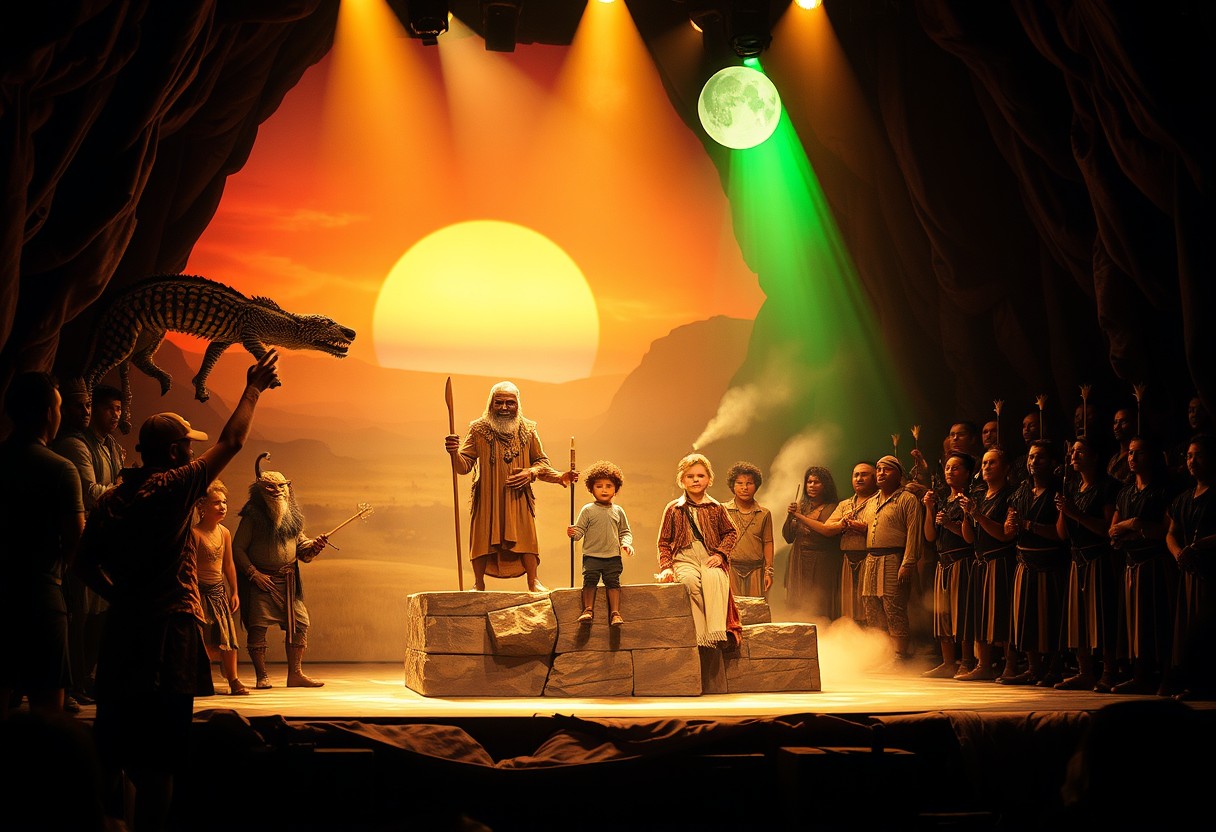
You’ve felt the thunderous beat of drums as animals gather on Pride Rock. You’ve heard that first powerful note of “Circle of Life” rise into the African sunrise, and something inside you stilled. The Lion King musical isn’t just a stage show-it’s a living, breathing world built on rhythm, chant, and story. From the opening procession to the final triumphant chorus, every song pulls you deeper into Simba’s journey. You don’t just watch it. You experience it through sound.
Maybe you saw the show years ago and still hum Rafiki’s chants, or perhaps you discovered it through the soundtrack and wondered about the meaning behind the Zulu lyrics. Either way, you’re not just hearing music-you’re hearing tradition, legacy, and emotion woven into every note. Let’s walk together through the songs that shape this unforgettable tale, starting with the roar that begins it all.
Sending money abroad?
Wise makes international transfers cheaper than most banks — real exchange rates, low fees, and a free debit card option in many countries.
Need social posts without the grind?
Holo turns one idea into reels and photo posts with AI — useful if you promote shows, reviews, or fan content and want more output with less editing time.
The Pulse of the Pride
You feel it before you even see the stage lights rise-a low, rhythmic hum that seems to come from beneath the earth itself. It’s the opening breath of *Circle of Life*, a sound that doesn’t just begin the show but summons something deep and wordless within you. This isn’t mere music; it’s a gathering call, echoing across generations and continents, rooted in the spiritual gravity of African traditions. The way Rafiki lifts Simba into the air mirrors ancient rites of passage, where community and cosmos align in a single moment. You’re not just watching a story unfold-you’re being invited into a living cycle, one where every creature, note, and gesture belongs to a greater whole.
Power surges through the ensemble as voices layer in polyphonic waves, drawing you into the communal heartbeat of the Savannah. There’s no separation between performer and environment; dancers become wind-stirred grass, drummers embody thunder, and singers carry ancestral memory in their tone. You can almost smell the dry savannah air, warm under a rising sun, as the music swells with purpose. This unity isn’t staged for effect-it feels inevitable, as though the land itself demands participation.
Even in stillness, the energy lingers, pulsing beneath silence like a distant storm.
Zulu Soul and Ancient Roots
From the first chant of “Nants’ ingonyama bagithi baba,” you’re grounded in language and sound older than the story itself. The Zulu lyrics aren’t decorative-they’re ceremonial, carrying weight and wisdom passed down through oral tradition. You hear reverence in every syllable, a connection to lineage that transcends translation. When the chorus answers with “Siyahamba,” their voices rise like a village answering a call to prayer, united in movement and mission. This isn’t performance as entertainment; it’s song as sacred act, linking the Pride Lands to real-world cultures where music shapes identity and continuity.
Rhythm here does more than keep time-it tells history. The pounding djembe patterns echo rituals from Southern Africa, where drumming communicates across distances and generations. You sense the presence of elders, not just in Rafiki’s character but in the very cadence of the music. These sounds don’t merely accompany the action; they guide it, reminding you that every birth, death, and return is part of a much longer journey. Even if you’ve never set foot on African soil, the music makes you feel the soil’s memory.
Your body responds before your mind catches up-feet tapping, breath syncing, spine straightening as if called to stand among the ancestors.
The Visual Symphony of Sunrise
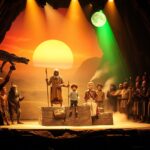
Light spills across the stage like honey, golden and thick, as the sun crests over an imagined horizon. You’re not just seeing a sunrise-you’re feeling its warmth, its promise, its quiet authority. The silhouette of animals moving toward Pride Rock isn’t random; it’s procession, choreographed like a religious pilgrimage. Each figure, from the stately giraffe to the bounding impala, adds to the growing tapestry of life responding to light. The music swells in tandem, matching the climb of the sun, until the full orchestra erupts in harmony the moment daylight touches the rock.
Color becomes meaning in this sequence-amber skies, rust-red earth, the flash of orange in Rafiki’s robe. These aren’t just design choices; they’re emotional cues, pulling you deeper into the sanctity of the moment. You don’t need dialogue to understand what’s happening. The visual rhythm mirrors the musical one: slow at first, then building, gaining momentum like a heart waking after long sleep. It’s cinema and theater fused, where every beam of light carries intention.
For those few minutes, darkness is not absence but anticipation-and when the light wins, you find yourself breathing again, as if you’d forgotten how.
The Young King’s Groove
Growing up in the golden light of the Pride Lands, your first real taste of Simba’s journey comes through a burst of rhythm and joy. “I Just Can’t Wait to Be King” isn’t just a catchy tune-it’s the sonic fingerprint of childhood freedom. You hear it in the clapping, the stomping, the playful call-and-response between Simba, Nala, and Zazu. The song skips like a young cub across the savanna, full of mischief and imagination. Its pop sensibility stands out against the more traditional African choral textures of the show, giving Simba’s dreams a modern, almost rebellious energy. This isn’t royal duty set to music. It’s a daydream with backbeats, where power means no rules and every wildebeest stampede is a dance break. The brass punches, the syncopated vocals, and even Zazu’s exasperated interjections all feed into a soundscape that feels alive with possibility. You don’t just watch Simba’s excitement-you feel it in your feet.
Pop Beats and Royal Dreams
Energy surges through the orchestra as hand drums collide with electric guitar riffs, pulling you straight into Simba’s fantasy of rule-free royalty. You’re not hearing a future king’s solemn vow but a child’s exaggerated vision of power-riding on elephants, dining with crocodiles, turning hyenas into garden ornaments. The music wraps these absurd images in glittering pop production, making them feel thrillingly real for a moment. Each verse builds higher, faster, like a game spiraling out of control, mirroring how quickly fun can blur into recklessness. You laugh at Zazu’s panic, but you also recognize that giddy rush of pretending to be someone bigger than you are. The choreography and music work together like synchronized dancers, turning acrobatics into punctuation. Even the key changes feel like leaps off cliffs, trusting the wind to catch you. This isn’t about leadership yet. It’s about what it feels like to imagine yourself untouchable, surrounded by color, sound, and friends who cheer every wild idea.
What makes the song stick isn’t just its catchiness, but how it captures a universal childhood impulse-the desire to skip ahead, to wear the crown before understanding its weight. You’ve probably had moments like this: daydreams of fame, freedom, or control that felt electric while they lasted. The melody dances on the edge of chaos, just like Simba himself, never settling too long on one note or idea. Percussion mimics footsteps running through forbidden places, while layered vocals create a sense of growing momentum, like a secret adventure gathering speed. Timon and Pumbaa’s later influence hasn’t arrived yet, but their carefree spirit already echoes in the rhythm. You don’t need hyenas or hakuna matata to feel that pull toward escape. The music hands you a mask, a throne made of sticks, and says: play along, just for now.
This lighthearted rebellion is framed not as foolishness, but as part of growing. You’re allowed to want freedom before you understand responsibility. The song doesn’t judge Simba for his naivety-it celebrates it. That choice gives emotional honesty to what could’ve been just comic relief. When the harmonies peak and the stage explodes with birds, masks, and swirling dancers, you’re not seeing a lesson being taught. You’re witnessing pure, unfiltered joy dressed in royal robes. And because the music commits fully to the fantasy, so do you. For three minutes, you’re not waiting to be king. You are.
The Philosophy of Carefree Flow
Laughter rings through the score like a ripple across still water, carrying you into a mindset far removed from duty or destiny. You’re invited not to analyze, but to move-to let rhythm dissolve worry and thought. Simba’s early world runs on instinct, play, and trust in the sun rising again. There’s no room for doubt when the beat is this inviting. The music wraps around you like warm air, encouraging steps that don’t plan ahead, just respond. You’ve felt this too-that moment when a song pulls you onto the floor, and suddenly your shoulders drop, your head tilts back, and you’re no longer thinking about tomorrow. That’s the pulse behind Simba’s days before everything changes.
This ease isn’t accidental. It’s built into the composition through call-and-response patterns, open vocal tones, and shifting tempos that mimic spontaneous games. You hear cubs chasing each other in the rising scales, see them hiding in the pauses between drum hits. Even the lyrics avoid deep reflection. Instead, they repeat, chant, tease-just like kids do when they’re lost in a moment. There’s wisdom here, though it wears feathers and dances on tiptoe. To live without fear, even briefly, is to practice a kind of courage. You’re not ignoring danger. You’re choosing, for now, to believe the world is kind. That belief shapes how you move through it-lighter, louder, freer.
The groove doesn’t last forever, and it’s not meant to. But its presence matters. In those bright notes and skipping rhythms, you find a truth older than thrones: growth needs space to play. You can’t become who you’re meant to be if every step is measured, serious, burdened. Sometimes you have to roar at the sky just because it’s blue. The music gives Simba-and you-permission to do exactly that.
The Shadow’s Rhythm
Scar’s presence in the musical doesn’t just shift the story-it alters the very beat of the savanna. From the moment he steps into the spotlight, a low, pulsing rhythm begins to coil beneath his words, pulling you into his world of quiet menace. You feel it in your chest before you even realize it’s there: a steady, syncopated thrum that mirrors his calculated thoughts. This isn’t the open expanse of Simba’s joy or the spiritual swell of the Circle of Life. This is something darker, something deliberate. The music wraps around his manipulation like a shadow, using off-beat accents and minor harmonies to unsettle your sense of safety. You’re not just hearing his plan unfold-you’re feeling it in your bones, one deceptive note at a time.
His voice doesn’t shout; it slithers. Each phrase is measured, stretched, and shaped to exploit silence as much as sound. When he sings, the tempo slows, drawing you in like a secret meant only for you. The orchestration drops to a whisper-low strings, distant drums, a single woodwind circling like a vulture. This isn’t chaos. It’s control. And that control is built on rhythm, the kind that makes you lean in, unsure whether to trust what you’re hearing. You start to question the truth not because he lies outright, but because the music makes doubt feel natural. The rhythm doesn’t demand your attention-it waits, patient and precise, until you’re already under its spell.
Even when the melody seems simple, the undercurrent is never still. Scar’s songs don’t build with grand crescendos but with subtle shifts-tiny pauses, unexpected pauses, a drumbeat just a fraction too late. These micro-tensions keep you off balance, mirroring the unease of those around him. You’re not just listening to a villain’s anthem. You’re experiencing the sound of influence, of a mind that knows exactly how to twist rhythm into a weapon. And the scariest part? You almost don’t notice it happening-until it’s too late.
Scavenger Beats and Hyena Cadence
When the hyenas enter, the rhythm fractures. Their footsteps don’t march-they skitter, a chaotic blend of staccato laughs and off-kilter claps that feel more like bones rattling than music. You can almost see their shadows darting in the dark, each beat unpredictable, each pause a setup for a jump or a snarl. This isn’t harmony. It’s hunger made audible. The percussion mimics their movements-sudden, jerky, always one step ahead of order. You’re never sure when the next burst will come, and that’s the point. The music keeps you as uneasy as the Pride Lands under Scar’s rule, where safety is an illusion and laughter hides teeth.
Scar doesn’t lead them with commands. He conducts their chaos, letting their erratic energy feed his power. Their rhythm isn’t his, but he shapes it, bends it, turns their wildness into a tool. Listen closely, and you’ll hear his voice cutting through their noise, always on the downbeat, always in control. The contrast is chilling. Where they’re all jagged edges, he’s smooth and slow, a spider at the center of a twitching web. You realize he doesn’t need to shout. His timing is his authority. The hyenas respond not to volume, but to the precision of his pauses, the weight of his silence.
Their songs don’t build-they ambush. A sudden shout, a burst of laughter, a drum hit out of nowhere. You flinch before you think. This isn’t music meant to move your feet. It’s meant to unsettle, to remind you that danger here doesn’t announce itself with fanfare. It creeps in on scavenger paws, in rhythms that refuse to settle. And in the middle of it all, Scar stands still, conducting the madness with a flick of his voice, a master of timing in a world gone rhythmically wild.
The March of Malice
A single drum starts it-low, slow, and impossible to ignore. It doesn’t invite you to dance. It demands you pay attention. This is the beat that follows Scar’s rise, the one that pulses beneath his speeches and spreads through the Pride Lands like drought. You feel it in your chest, steady and suffocating, as if the land itself is holding its breath. The tempo never rushes, never falters. It’s the sound of inevitability, of power taking root not with a roar, but with a whisper that grows louder with every step. This isn’t a battle march. It’s a takeover, measured and methodical.
The melody wraps around the drum like smoke, curling through minor chords and dissonant harmonies. Strings slide between notes, refusing to settle, while brass enters in sharp, stabbing bursts. You don’t hear triumph here. You hear calculation. Each instrument plays its part in building a soundscape where trust erodes and fear takes hold. The rhythm stays constant, but the layers around it shift, twist, and decay-just like Scar’s promises. You start to question what’s real, not because the music shouts lies, but because it makes deception feel natural, even beautiful.
When the full ensemble joins, it doesn’t feel like victory. It feels like surrender. The beat that began quietly now dominates, drowning out any hint of warmth or light. You’re not inspired. You’re overwhelmed. This is how tyranny sounds-not with a bang, but with a rhythm so steady, so relentless, that resistance starts to feel useless. And that’s Scar’s real power. He doesn’t just seize the throne. He changes the soundtrack of the kingdom, one deliberate, malicious beat at a time.
Hearts in Harmony
When Simba and Nala reunite beneath the stars, their voices blend in a way that feels both tender and charged with unspoken duty. You can hear the past in their harmonies, the childhood friendship now layered with the weight of what must be done. This isn’t just a love song-it’s a quiet reckoning, where personal longing meets the call of a kingdom waiting to be restored. The lyrics don’t shout destiny; they whisper it, letting emotion guide the return to purpose.
There’s a stillness in these moments that pulls you in, as if the desert itself is holding its breath. The music wraps around you like a warm night wind, carrying memories of home and the faint echo of a roar that once ruled the savanna. You begin to feel how love can awaken courage in ways duty alone never could. It’s not about grand declarations but the subtle shift in a voice, the way two people find their rhythm again after years apart.
What makes this so powerful is how intimacy becomes transformation. In the soft exchange of words and melody, Simba stops running. You see it in the way his voice steadies, how Nala’s strength fills the spaces where his doubt once lived. This duet doesn’t just rekindle romance-it reignites a king.
Desert Duets and Starlight
Under the vast African sky, the desert becomes a sanctuary for whispered confessions and reawakened bonds. You hear it in the way Simba and Nala’s voices circle each other, tentative at first, then bolder, like flames catching wind. The orchestration is sparse-just enough to carry the emotion without drowning it-letting their harmonies stand bare, honest. This isn’t the roar of a king yet, but the first quiet beat of a heart remembering its place.
Their song unfolds like a memory returning, each note pulling Simba closer to who he once was-and who he must become. You can feel the pull between comfort and responsibility, how love makes the truth easier to face. The lyrics don’t force the journey; they invite it, wrapped in warmth rather than urgency. It’s in the way Nala sings not to convince, but to remind-that home hasn’t forgotten him, even if he’s tried to forget it.
There’s magic in the simplicity. No grand chorus, no dramatic key change-just two voices under a blanket of stars, realigning. You realize that sometimes, the most powerful moments of transformation happen not in battle, but in quiet, when someone who knows your soul sings you back to yourself.
The Lioness Vocal Strength
Nala’s voice cuts through the haze of Simba’s denial with clarity and quiet fire. You don’t need volume to feel her power-her conviction carries every note, shaping a strength that’s both nurturing and unyielding. She doesn’t wait for permission to lead; her vocals stand firm, a counterbalance to Simba’s hesitation. In her phrasing, you hear the pride of the lioness who stayed, who fought, who refused to let the kingdom crumble.
What strikes you most is how her voice blends grace with grit. She sings not to charm, but to challenge, wrapping truth in melody so it lands gently but leaves a mark. There’s no pleading in her tone-only certainty. When she sings of the drought, the silence of the Pride Lands, you feel the weight of those words because she carries them so fully, without theatrics, just raw belief.
Her performance reminds you that strength isn’t always loud. Sometimes it’s in the steady gaze, the calm voice, the woman who stands her ground and sings a king back to his destiny. You walk away knowing Nala was never just a love interest-she was the heartbeat keeping the Pride Lands alive.
The Spirit of the Father
When the wind stirs across the savanna and the stars seem to lean closer, you feel it – a presence that goes beyond memory. It’s in these quiet moments that Mufasa’s voice returns, not just as a sound but as a living truth woven into the world around Simba. The legacy of a father isn’t carried in grand speeches or titles, but in the way a son pauses before making a choice, sensing a guiding hand just behind his shoulder. You’ve likely felt this too – the echo of someone who believed in you long after they’ve gone. That unseen strength, the courage to face what once felt impossible, often begins with a whisper from the past that says, “You are mine, and you are enough.”
Even when Simba runs from his name, the rhythm of his father’s wisdom lingers in his bones. It surfaces in the way he protects Nala, in the way he hesitates at the edge of the watering hole, seeing not just his reflection but a face he once tried to forget. This isn’t just guilt or grief – it’s inheritance. You don’t need a throne to recognize this kind of calling. It shows up when you stand a little taller after years of shrinking, when you speak up not because you’re fearless, but because someone once spoke for you when you couldn’t. The weight of lineage becomes light when you realize it’s not about living up to a name, but about carrying it forward with your own truth.
There’s power in knowing where you come from, not because it defines you, but because it reminds you of who you never stopped being. Simba’s journey isn’t about reclaiming a crown – it’s about reclaiming himself, piece by piece, through the love that outlived death. You’ve carried losses that shaped you in silence. Maybe it was a parent’s laugh, a grandparent’s story, or a mentor’s quiet nod of approval. These aren’t just memories. They’re compass points. And when the night is darkest, that voice – steady, sure, full of grace – still calls you home.
Ancestral Call and Legacy
Something shifts the moment Rafiki draws Mufasa’s face in the dust and points to the sky. You’re not just watching a revelation – you’re feeling it in your chest, as if the air itself remembers kings. Simba’s hesitation melts not because he sees a ghost, but because he finally hears what the wind has been saying all along: you are not alone. This moment isn’t about magic or spectacle. It’s about the deep, unspoken truth that love doesn’t vanish. It transforms. You’ve likely had your own version of this – a song, a scent, a phrase that suddenly pulls someone back into the room, not in body, but in spirit. These are the threads that stitch generations together, invisible but unbreakable.
The call of ancestry doesn’t always come with thunder or flames. Sometimes it’s a stillness in the trees, a sudden clarity in a moment of doubt. For Simba, it’s the realization that courage isn’t something he has to find – it’s something he already carries, passed down like breath. You don’t need a royal lineage to feel this. It lives in the way your mother’s strength surfaces when you comfort a friend, or how your grandfather’s patience emerges when you teach a child to tie their shoes. These aren’t coincidences. They’re echoes. The people who shaped you continue to act through you, long after their voices have faded.
Legacy isn’t measured in monuments or titles. It’s in the choices you make when no one’s watching, the kindness you offer when it costs you something, the way you rise after falling. Simba’s return to Pride Rock isn’t just a homecoming – it’s an acceptance that he is both his father’s son and his own man. You’ve inherited more than you realize. Every lesson whispered, every sacrifice made in silence, every dream deferred for your sake – they live in your hands now. And when you choose to lead with love, you answer the call that’s been waiting in your blood all along.
Midnight Reflection Melodies
There’s a hush in the air when the sun dips below the horizon and the world slows to a breath. This is when the deepest truths rise – not in shouts, but in quiet songs that seem to come from nowhere and everywhere at once. “He Lives in You” doesn’t arrive with fanfare. It slips in like moonlight, gentle but impossible to ignore. You’ve had nights like this – lying awake, heart heavy with questions no one can answer. In those moments, music becomes more than sound. It becomes company. A reminder that even in isolation, you’re connected to something greater than yourself.
The melody wraps around Simba like a lullaby from the earth itself, one that doesn’t promise easy answers but offers something better: belonging. You don’t need to be a king to feel this kind of recognition. It surfaces when a song plays at just the right time, when a lyric brushes against a wound you thought had healed, when a harmony makes you close your eyes and exhale for the first time in weeks. These aren’t just songs. They’re vessels. They carry the weight of grief, the warmth of memory, the quiet insistence that you are still part of a story that began long before you.
Music at night has a way of dissolving walls – between past and present, between loss and love, between who you were and who you’re becoming. When Simba listens, he’s not just hearing words. He’s feeling the pulse of generations, a rhythm that says, “You are not forgotten.” You’ve felt this too – in a hymn hummed by a grandparent, in a tune your father played on a cracked tape, in the silence after a song ends but the feeling lingers. These are the moments when the veil thins, and you remember: you are held, even in the dark.
The Cycle Reborn
As the sun rises over Pride Rock, you feel the land breathe again. The dry earth softens, green shoots push through the cracked soil, and the animals return in quiet procession. This renewal isn’t just a change in scenery-it’s the living proof that balance has been restored. Simba’s return wasn’t just about claiming a throne; it was about honoring a promise whispered on the wind, one that echoes through every creature finding its place once more. You’ve watched him grow from a frightened cub into a leader who finally understands that power isn’t taken, it’s carried with humility. The Circle of Life isn’t broken-it simply waited for the right moment to turn again.
There’s a stillness in the air just before the final chorus swells, a breath held between past and future. You can almost hear Rafiki’s chuckle as he lifts the new cub into the sky, mirroring the very first image of the story. This moment doesn’t just close the loop-it completes it with grace. The music swells not with triumph, but with reverence, as if the earth itself is singing in unison. You’re reminded that every ending carries a beginning, every loss makes room for new life, and every roar echoes beyond the one who made it.
What stays with you isn’t just the spectacle, but the quiet truth beneath the songs and steps. You’ve walked this journey not as a spectator, but as someone who’s felt the weight of legacy, the pull of fear, and the courage it takes to return home. The final notes don’t fade-they settle into your bones, a gentle reminder that you, too, are part of something greater. The cycle doesn’t demand perfection, only presence. And in that, the story finds its truest harmony.
Peak Performance and Confrontation
When Simba finally faces Scar, the air on stage thickens with tension you can almost touch. You’ve seen the buildup in every hesitant step, every shadowed glance, but now there’s no turning back. The music drives the scene like a heartbeat racing toward truth, each note tightening the coil of emotion until it snaps. This isn’t just a battle for the Pride Lands-it’s the moment Simba stops running from himself. You feel it in your chest as the drums pound and the flames rise, the choreography mirroring the chaos inside him.
Scar’s taunts cut sharp, but they no longer hold power. You notice how Simba doesn’t lunge at first-he listens, he sees, and in that stillness, he grows taller than ever before. The orchestra doesn’t rush; it lets the silence speak, then surges when he roars not in anger, but in clarity. Every movement on stage-lighting, costume, even the dust kicked up by the ensemble-feeds into the raw honesty of this turning point. You’re not just watching a confrontation. You’re witnessing a soul reclaiming its name.
What makes this moment unforgettable is how grounded it feels, even amid the spectacle. The score doesn’t glorify violence; it honors resolution. You hear echoes of “He Lives in You” beneath the chaos, a quiet thread reminding Simba-and you-of who he’s never stopped being. By the time Scar falls, it’s not with a bang, but with the weight of his own choices. And when the rain comes, washing the ash from the land, you feel the relief like a cool hand on your forehead. The storm wasn’t just punishment. It was cleansing.
The Final Roar of the Pride
After the storm clears, the silence feels sacred. You sit a little straighter as Simba ascends Pride Rock, not with fanfare, but with quiet resolve. The music returns softly, a single drumbeat like a heartbeat restarting. This isn’t the roar of a conqueror, but of a guardian stepping into his role at last. You can see the weight settle on his shoulders, not as a burden, but as belonging. The other animals gather not because they have to, but because they choose to. You’re reminded that leadership isn’t claimed in battle-it’s earned in stillness.
The final tableau unfolds without words. Rafiki lifts the cub high, and the same golden light from the opening number spills across the stage. You feel the full circle click into place, not with a jolt, but with a sigh of relief. The melody of “Circle of Life” returns, not as a memory, but as a promise kept. Children in the audience lean forward, eyes wide, just as you might have at their age. This moment doesn’t just end the show-it passes it on.
As the curtain falls, you realize the roar you hear isn’t just Simba’s. It’s the sound of balance restored, of grief transformed, of a legacy continuing without fear. You leave not with answers, but with a feeling deep in your chest-one that hums long after the lights come up.
Final Words
You’ve walked through the African savanna with Simba, felt the weight of loss and the spark of hope, all guided by a soundtrack that breathes life into every moment. The songs of *The Lion King* musical aren’t just performances-they’re emotional milestones that mark Simba’s journey from cub to king. From the thunderous opening of “Circle of Life” to the quiet strength in “He Lives in You,” each note pulls you deeper into a story about identity, legacy, and belonging.
You’ve seen how music shapes the characters’ paths. “I Just Can’t Wait to Be King” brings back that restless energy of youth, while “Be Prepared” sends a chill with its cunning build. Even the lighter moments, like “Hakuna Matata,” carry a deeper message about healing and moving forward. These songs don’t just entertain-they help you feel what Simba feels, making his triumphs your own.
When the final harmonies of “He Lives in You” rise, you’re left with a sense of connection-to family, to nature, to the quiet voice inside that reminds you who you are. The music stays with you, not because it’s grand, but because it’s honest. You carry it long after the curtain falls, humming a melody that feels like home.
FAQ
Q: What is the meaning behind “Circle of Life” at the beginning of the musical?
A: “Circle of Life” opens the musical with a powerful depiction of balance and interconnectedness in nature. Animals gather at Pride Rock as Rafiki presents Simba to the kingdom, symbolizing birth, legacy, and the natural order. The song blends African chants, gospel harmonies, and orchestral grandeur to establish the central theme: all living things are part of a greater cycle. The rising sun, the animal procession, and the swelling music together create a moment of awe that sets the tone for Simba’s journey.
Q: How does “I Just Can’t Wait to Be King” reflect young Simba’s personality?
A: This upbeat, playful number showcases Simba’s youthful energy and naivety. Sung with Nala and Zazu, it reveals his excitement about future power while ignoring the responsibilities of leadership. The song’s calypso rhythm and colorful staging-floating on giraffes, swinging on vines-mirror a child’s imagination. The lyrics hint at rebellion and impatience, foreshadowing his later choices. It contrasts sharply with the heavier themes that follow, grounding the story in relatable childhood dreams.
Q: Why is “Be Prepared” such a dark and intense song?
A: “Be Prepared” serves as Scar’s villainous manifesto, where he rallies the hyenas to overthrow Mufasa. The song’s militaristic beat, ominous brass, and industrial staging reflect manipulation and propaganda. Scar uses fear and false promises to gain loyalty, and the number’s theatrical style-complete with goose-stepping hyenas-evokes totalitarian imagery. The song’s intensity underscores the danger lurking beneath the surface of the Pride Lands, marking the turning point where innocence gives way to tragedy.
Q: What role does “Can You Feel the Love Tonight” play in Simba’s emotional journey?
A: This romantic ballad marks Simba’s return to connection and healing. As he reconnects with Nala, the song captures warmth, nostalgia, and the comfort of love. Unlike the earlier, more energetic songs, this one slows the pace, allowing space for emotional depth. Sung partly in shadow and partly under starlight, the staging mirrors Simba’s internal conflict-caught between a peaceful present and a past he’s trying to avoid. The song doesn’t resolve his guilt, but it begins to soften his resistance to returning home.
Q: How is “He Lives in You” different from the original film’s music?
A: “He Lives in You” was introduced in the stage adaptation and expands on the film’s spiritual themes. It replaces and deepens the message of “King of Pride Rock,” emphasizing ancestral presence and inner strength. The song appears multiple times-first when Rafiki guides young Simba, then when adult Simba remembers his father. With its choral layers and Polynesian-inspired melodies, it reinforces the idea that identity is shaped by heritage. This recurring motif gives the musical a stronger emotional and cultural anchor than the film’s version.
Curious about forex — without risking real money first?
XM offers a free demo account so you can practice trading with virtual funds before deciding whether live trading is for you.