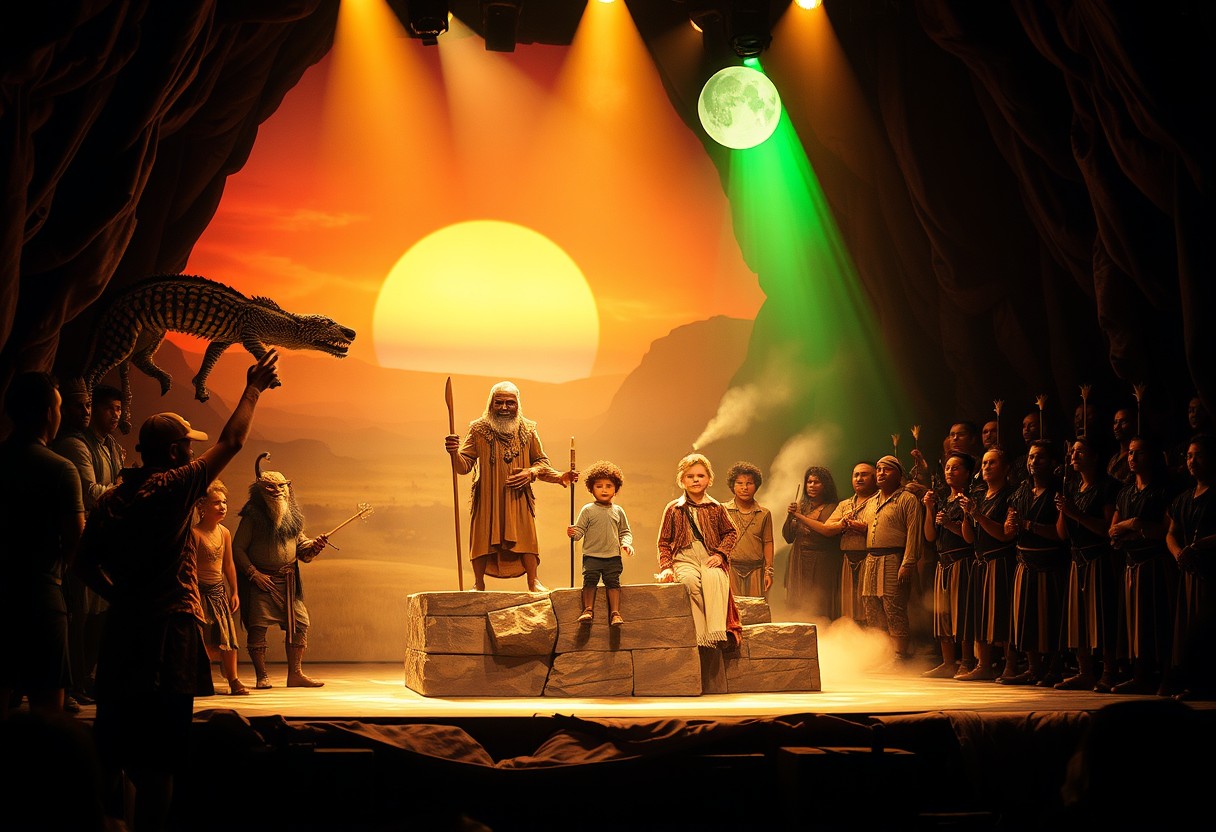








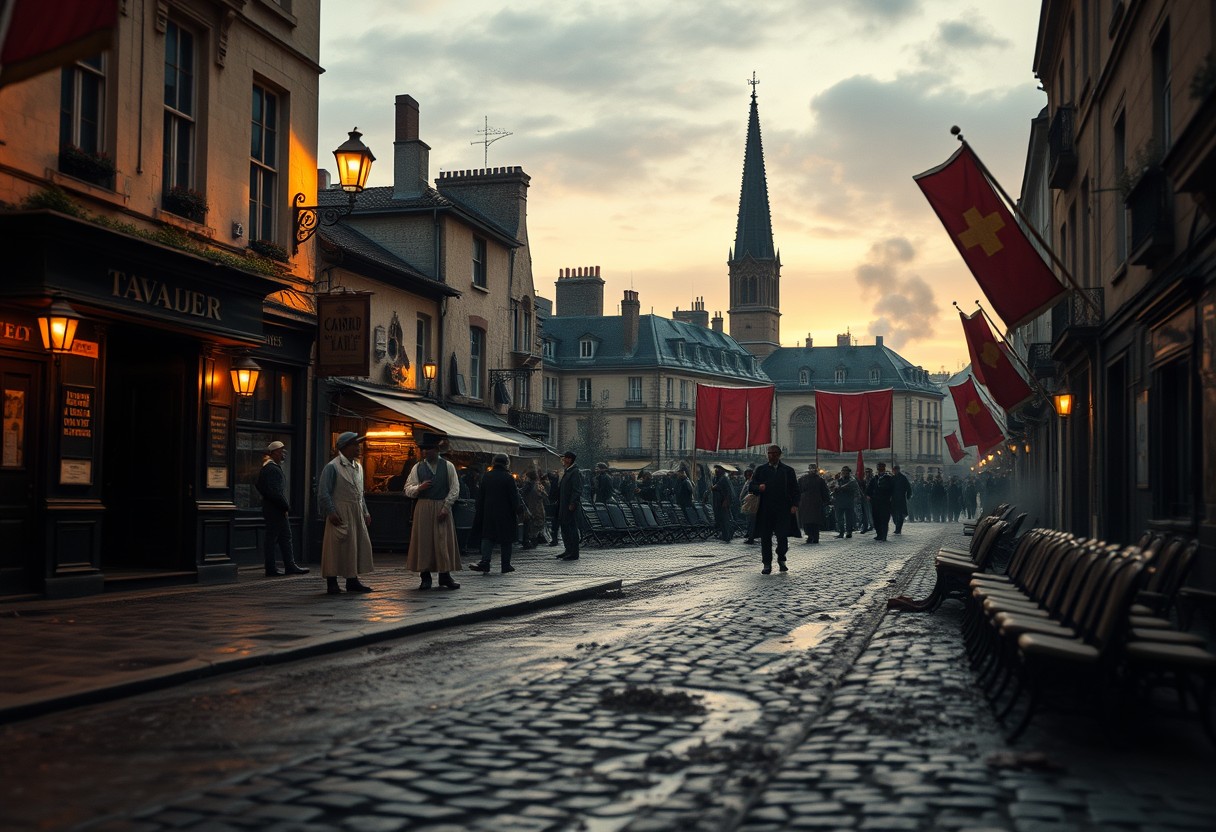
You’ve felt it-the surge of emotion when the factory whistle blows and the workers’ voices rise in weary unison. “At the End of the Day” pulls you straight into the grime and grit of 19th-century France, where exhaustion meets injustice. As the musical unfolds, each song becomes a window into struggle, hope, and rebellion. From Fantine’s quiet despair to the students’ fiery anthem, the score carries you through a world shaped by hardship and hunger for change.
You’re not just listening to music-you’re walking the cobblestone streets alongside Jean Valjean, Javert, and the young revolutionaries. These songs don’t just tell a story; they make you feel the weight of a loaf of bread, the ache of a mother’s sacrifice, and the electric thrill of a dream catching fire. By the time “Do You Hear the People Sing?” echoes into the night, you understand how melodies can become movements.
Sending money abroad?
Wise makes international transfers cheaper than most banks — real exchange rates, low fees, and a free debit card option in many countries.
Need social posts without the grind?
Holo turns one idea into reels and photo posts with AI — useful if you promote shows, reviews, or fan content and want more output with less editing time.
The Rhythmic Machinery of the Oppressed
Each beat in “At the End of the Day” drives forward like the piston of a factory engine, pulling you into the unrelenting grind of labor that defines these workers’ lives. You can feel the weight in the rhythm-steady, mechanical, inescapable-as if the music itself is chained to the same cycle of exhaustion and despair. The tempo doesn’t waver, just like their days don’t change: dawn brings the same work, the same hunger, the same struggle to survive another twenty-four hours. This isn’t just a song about tired people; it’s a sonic representation of industrialized poverty, where human lives are reduced to cogs in a machine that grinds on regardless. The repetition in the melody mirrors the repetition in their routines, each verse a new day that looks exactly like the last. You’re not just listening to their story-you’re living it, second by second, breath by breath.
There’s no room for individuality in this rhythm. The overlapping voices blend into a single, unified sound, not because of harmony, but because their suffering is shared. You hear resignation in the way the phrases loop, in the way the lyrics circle back to wages, debts, and fatigue. This isn’t a protest yet-it’s the quiet before the storm, the collective breath held too long. The music doesn’t rise in defiance here; it drags, it plods, it echoes the footsteps of those who walk the same path every morning with no hope of escape. Even the instrumentation feels cold-percussive, metallic, like hammers striking iron. You’re meant to feel the factory in your bones, to understand that this song isn’t just background music to their lives. It is their lives.
What makes this moment so powerful is how ordinary it all seems. There are no grand declarations, no dramatic shifts-just the daily toll of surviving in a world that doesn’t care if you make it. You know these people. You’ve seen their faces in crowded subways, in long lines at shelters, in the hands that serve you coffee before sunrise. The song doesn’t dramatize their pain; it documents it. And in doing so, it makes their struggle impossible to ignore. The rhythm doesn’t let you look away. It keeps pushing, keeps demanding your attention, not with volume or fury, but with persistence. You begin to sense that this machine isn’t just outside them-it’s inside, shaping their thoughts, their dreams, their very sense of time. Each beat says: this is how it’s always been. Each note asks: how long can it go on?
The Factory as a Grave
Walking into the factory each morning feels less like going to work and more like entering a tomb where hope is buried a little deeper every day. You can see it in the way the women move-shoulders hunched, eyes down, steps measured not by energy but by obligation. The air is thick with dust and silence, broken only by the clatter of machinery that never stops, never rests, never pities. This isn’t a place of creation; it’s a place of consumption. It takes their youth, their health, their dignity, and gives back just enough to keep them returning. The song doesn’t need to shout this truth-the rhythm whispers it with every beat, steady and suffocating. You feel the walls closing in, not because they’re literally there, but because the music makes you experience the confinement.
There’s a kind of death that happens here that isn’t marked by a funeral or a headstone. It’s the slow erosion of self, the quiet surrender of dreams too heavy to carry under such weight. You’ve likely felt this kind of exhaustion before-not just physical, but emotional, the kind that makes you question whether anything you do matters at all. The factory doesn’t just employ these workers; it defines them. Their worth is measured in output, their value in how much they can endure. And when the whistle blows at day’s end, they don’t walk out transformed by purpose. They shuffle out diminished, carrying the day’s labor like a shroud. The melody mirrors this decline, descending in small, weary steps, as if even the music is too tired to rise.
What’s chilling is how normal it all appears. No one screams. No one collapses. They just keep moving, because stopping means falling behind, and falling behind means losing everything. The song captures this numbness perfectly-the way pain becomes routine, the way suffering fades into the background like the hum of a distant engine. You’re not witnessing a tragedy in the making; you’re inside it, breathing the same stale air, feeling the same mechanical pulse. The factory doesn’t need to be cruel to be destructive. It just needs to exist, day after day, grinding lives into dust without ever raising its voice. And in that silence, in that routine, lies the real horror: no one even notices it’s happening.
The Chorus of the Desperate
When the voices join in unison, it’s not harmony you hear-it’s survival. Each voice carries its own burden, yet they blend into something heavier, something collective, as if their pain is too great for one person to hold alone. You can hear the fatigue in the way the lines overlap, the way words tumble over each other like people rushing to be heard before the moment passes. This isn’t a choir; it’s a crowd, a workforce, a community bound not by joy but by necessity. The lyrics repeat the same concerns-money, time, hunger-but they don’t feel redundant. They feel urgent, like a mantra chanted in the dark, hoping repetition might change the outcome. You begin to understand that their unity isn’t born from strength, but from exhaustion. They sing together because they’ve all reached the same breaking point.
There’s no melody that lifts here, no crescendo that promises escape. Instead, the music stays low, grounded, as if afraid to rise too high and shatter. You’re pulled into their rhythm, not as a listener, but as someone standing beside them, feeling the same ache in your arms, the same dread in your chest. The way the phrases echo-“another day,” “how long, how long”-isn’t just poetic. It’s psychological. It mimics the looping thoughts of someone trapped in a cycle they can’t control. You’ve had those thoughts too, late at night, wondering when things will get better, knowing they probably won’t. The song doesn’t offer answers. It just says: you’re not alone in asking.
What gives this chorus its power is its refusal to look away. It doesn’t romanticize the workers or paint them as heroes. They’re not fighting yet-they’re enduring. And in that endurance, there’s a quiet defiance. You hear it in the steadiness of their voices, in the way they keep singing even when the tune offers no comfort. This isn’t a call to revolution; it’s a record of what it costs simply to exist at the bottom. The repetition isn’t a flaw-it’s the point. Each verse is another day, another shift, another step in a path with no visible end. And yet, they keep singing. Not because they believe it will change anything, but because stopping would mean admitting defeat. So they sing, not in hope, but in resistance-to silence, to invisibility, to being forgotten.
The Melodic Descent into the Abyss
One moment in the musical cuts deeper than any other-the raw ache of Fantine singing I Dreamed a Dream. You feel it not just as sorrow, but as a reckoning. This is no mere lament for lost love; it’s the final breath of hope crushed under years of exploitation and abandonment. She once believed in kindness, in fairness, in promises kept. Now, standing on the edge of death and destitution, she sings not to an audience but to the ghost of her younger self, the girl who trusted too easily and paid too dearly.
Society stripped her dignity piece by piece-her job, her hair, her child-and now this song becomes her quiet funeral. There’s no grand orchestral swell to carry her pain; instead, the melody stays close, almost suffocating, mirroring how the world closed in around her. The simplicity of the tune belies its emotional weight, each note weighted with regret, betrayal, and exhaustion. You don’t just hear her story-you live it in the space between the words, in the way her voice cracks on “I dreamed that God would be forgiving.”
This moment doesn’t ask for pity. It demands witness. Fantine isn’t performing for mercy; she’s testifying. Her dream wasn’t extravagant-just safety, love, a place to belong. That such modest hopes could be annihilated by rigid social judgment and economic cruelty makes her tragedy universal. In her voice, you recognize every person broken by systems that see poverty as moral failure. The song lingers not because it’s beautiful, but because it’s true.
Chords of a Shattered Youth
Fantine’s voice in I Dreamed a Dream carries the weight of years folded into minutes. You can hear the flicker of the girl she was-innocent, hopeful, humming love songs under her breath-before life turned sharp and unforgiving. The music begins gently, almost like a lullaby, but soon bends under the pressure of memory. Each verse peels back another layer of loss, not just of love or status, but of self. This isn’t nostalgia-it’s autopsy.
The lyrics speak of dreams deferred, but the melody tells a different story: one of gradual erosion. You notice how the phrases descend, mirroring her fall from factory worker to prostitute, from mother to outcast. There’s no dramatic key change, no redemption arc within the song-just resignation settling like dust. The harmonies stay sparse, refusing to comfort, forcing you to sit in the discomfort of her truth. It’s not meant to uplift. It’s meant to haunt.
You’ve likely known someone whose light dimmed slowly, worn down by circumstance rather than catastrophe. That’s what makes this performance so piercing. Fantine isn’t undone by one event but by a thousand small rejections-a withheld wage, a sneered insult, a child taken. The song captures how dignity can be dismantled quietly, without fanfare, until only a whisper remains. And in that whisper, you hear the cost of a world that rewards virtue only when it’s convenient.
The Silence of God
When Fantine sings, “I dreamed that God would be forgiving,” the line lands like a stone dropped into still water. You feel the silence that follows-not just in the music, but in the universe she thought was watching. There’s no answer, no divine intervention, no last-minute rescue. Just cold air and unanswered prayers. Her faith wasn’t loud or performative, but it was real. And its absence now speaks louder than any sermon.
The music doesn’t mock her belief, nor does it offer solace. Instead, it holds space for doubt-the kind that creeps in when you’ve done everything “right” and still end up broken. You know this feeling. Maybe not in the same extremity, but in moments when help didn’t come, when justice looked away. The song doesn’t rage at heaven; it simply states the void. That restraint makes it more devastating.
Her suffering isn’t framed as punishment or lesson. It’s presented as fact. And in that honesty, the musical refuses easy answers. You’re not told to trust the plan or wait for grace. You’re asked to see her-to truly look at what happens when compassion fails and institutions turn their backs. The silence of God here isn’t theological debate. It’s the sound of loneliness amplified by expectation. And in that silence, Fantine becomes unforgettable.
The Cold Constellations of Justice
Justice, as Javert sees it, isn’t shaped by compassion or change-it’s fixed, like stars in the night sky, unblinking and absolute. You feel this in his voice, cold and precise, as he sings of duty and order. There’s no room for doubt in his worldview, no allowance for redemption or growth. To him, the law isn’t a tool but a religion, and he its high priest, watching from the shadows, ready to enforce its edicts without flinching. The constellations he references aren’t just poetic imagery-they’re symbols of an unchanging moral code that he believes governs all, indifferent to human suffering. You can hear the rigidity in the music, the steady, marching rhythm that refuses to bend, much like Javert’s own conscience.
His certainty becomes his prison, though he doesn’t realize it. Every note he sings tightens the chain of his own making, binding him to a system that offers no grace. When he sings of stars that “never close an eye,” you sense the weight of endless vigilance, a life spent policing both others and himself. There’s a loneliness in that kind of devotion, one that doesn’t allow for error or mercy. You begin to see that his obsession isn’t with justice as much as control-the need to believe the world operates on clear lines, right and wrong etched in stone. But people aren’t stars. They shift, they grow, they surprise. And that’s what terrifies him most.
The music reflects this inner rigidity with stark, unadorned melodies, refusing to soften or sway. You hear no warmth in his phrasing, no hint of doubt-just the cold clarity of someone who has staked his entire identity on an inflexible truth. It’s not rage that drives him, but conviction so deep it has fossilized into something unyielding. Even when the world around him changes, even when Valjean shows mercy, Javert cannot bend. The stars he worships demand perfection, and when he finally fails to meet it, the collapse is total. You’re left with the haunting image of a man who spent his life chasing light, only to be undone by the very darkness he refused to acknowledge within himself.
The Harmony of the Inflexible
Order matters to Javert, not as a means to peace but as an end in itself. You hear it in the way his lines are delivered-measured, deliberate, never rushed or uncertain. Each phrase fits into a larger structure, like bricks in a wall that must align perfectly or the whole thing falls. There’s no improvisation in his moral code, no space for extenuating circumstances. A crime is a crime, a law is a law, and anyone who breaks it must pay. The music underscores this with rigid phrasing and minimal variation, as if even a single note out of place would unravel everything he stands for. You start to understand that for him, consistency isn’t just a virtue-it’s the only thing keeping chaos at bay.
His songs rarely rise in pitch or volume, staying within a narrow, controlled range. You notice how he avoids emotional peaks, even in moments of confrontation. There’s no trembling with anger, no breaking under pressure-just a steady, relentless presence. This isn’t because he lacks feeling, but because he’s spent a lifetime suppressing it in service of duty. The harmony he sings is not one of beauty, but of precision. It’s the sound of someone who has trained himself to ignore the messy, unpredictable parts of life, believing that discipline alone can purify the world. But you can’t help but wonder what it costs him to stay so perfectly aligned.
Even when he’s alone, reflecting on Valjean’s mercy, his melody doesn’t waver. You expect a crack, a shift, some sign of internal conflict-but the music remains locked in its form. This isn’t a man wrestling with doubt; it’s a man refusing to admit it exists. The harmony he clings to isn’t liberating-it’s confining, a cage of his own design. And yet, there’s a strange kind of integrity in it, a terrible consistency that commands a kind of reluctant respect. You may not agree with him, but you can’t deny the power of someone who believes so completely in what he does, even when it leads him straight into the abyss.
A Night Without Mercy
Midnight finds Javert standing on a bridge, the Seine flowing beneath him like a dark verdict. You can hear the silence in the music, the absence of melody, as if the world has gone mute in anticipation. This isn’t a moment of rage or despair-it’s colder than that. It’s the quiet collapse of a man who has built his entire life on a foundation that no longer holds. The stars are still there, cold and distant, just as they’ve always been. But now, for the first time, he sees them for what they are: indifferent, unmoving, and utterly silent. They offer no answers, no comfort, no judgment-just existence. And that’s what undoes him.
He sings not to persuade, not to justify, but to confess. You hear the weight in every word, the slow unraveling of a mind that can no longer reconcile what it sees with what it believes. Valjean’s mercy was an act of grace, but to Javert, it was an impossibility, a violation of the natural order. How can a criminal show more honor than a policeman? How can forgiveness exist where the law sees only guilt? The questions don’t come with answers, only the growing certainty that his world has been a lie. The music doesn’t swell or climax-it simply fades, like breath in the cold, leaving space for the silence to speak.
When he steps into the river, it’s not with drama, but with resignation. You don’t hear a struggle, only the quiet acceptance of someone who has run out of reasons to stay. The stars remain, unchanged, as they have for centuries. They don’t mourn him, don’t mark his passing. And in that indifference, you find the true horror of his fate-not that he died, but that the system he served never needed him at all. His life, his devotion, his unyielding sense of duty-none of it mattered to the cold constellations he worshipped. They simply watched, as they always do, and said nothing.
The Polyphonic Convergence of Fate
One Day More doesn’t just advance the plot-it pulls every character into a shared moment of decision, where love and revolution pulse in the same heartbeat. You hear Marius dreaming of Cosette while Enjolras rallies students to arms, yet both voices rise with equal urgency. Jean Valjean prays for safety, Javert vows relentless pursuit, and the students imagine tomorrow as something they can build with their hands. Their separate hopes and fears don’t compete-they interlock, note by note, like threads drawn taut across a single loom. This isn’t harmony for dramatic effect; it’s fate tightening its grip, one voice at a time.
Each character sings not only for themselves but for the idea that tomorrow might be different. You feel Éponine’s quiet ache when she whispers her unrequited love, just as you sense the fiery certainty in Enjolras’ call to action. Even minor figures like the Courfeyrac or Grantaire lend texture, their lines weaving through the main arcs like brushstrokes completing a portrait. The music swells not because it’s loud, but because every soul onstage believes this night could change everything. And in that belief, the ordinary becomes monumental-the personal becomes political.
No single voice dominates, because no single life stands apart. You’re reminded that revolutions aren’t sparked by slogans alone, but by the accumulation of private longings suddenly given public voice. One Day More builds this truth slowly, letting each verse add weight until the final chord feels inevitable. The barricade hasn’t been raised yet, but you already hear its echo in the way their melodies converge. This is how history often begins-not with a shout, but with a song everyone starts humming at once.
The Architecture of a Crisis
Sixteen characters move through ten minutes of music, yet you never lose track of who’s speaking or why it matters. Each verse lays another brick in the growing tension-Marius pens a letter, Valjean burns his papers, the students light candles in a café. You follow their motions like blueprints: small actions that collectively form the foundation of revolt. There’s no grand announcement, just the quiet certainty that something has shifted beneath the surface of the day.
Your attention moves naturally between them because the music gives each person space to breathe, even as the tempo pushes forward. Gavroche boasts with swagger, the girls whisper about love, and Javert’s low tones cut through like a warning bell. These aren’t random moments stitched together-they’re deliberate placements in a structure that’s already leaning toward collapse. You begin to see how isolation feeds injustice, and how loneliness, when multiplied, becomes a kind of fuel.
What makes the scene so powerful isn’t the chaos, but the order within it. Every line serves dual purposes-revealing inner conflict while advancing the collective arc. When Enjolras declares “tomorrow we’ll be far away,” he speaks for himself and for dozens who will follow him. The architecture isn’t built of stone or wood, but of decisions made in silence, now finally voiced. You realize the crisis was never sudden. It was rehearsed in quiet moments like these, long before the first shot was fired.
Tomorrow as a Question
They all sing about tomorrow, but none define it the same way. For Cosette, it’s the first morning she’ll wake in Marius’ arms. For Valjean, it’s the hope of staying free long enough to see her happy. You catch the tremble in his voice when he asks for God’s protection-it’s less a prayer than a plea whispered into the dark. Each character holds a different image of what comes next, and their melodies reflect that uncertainty, rising and falling like breath in the night.
Even the revolutionaries don’t speak with one mind. Enjolras sees dawn as a threshold, a clean break from the past. Grantaire sings along, but with irony lacing his tone, as if mocking his own desire to believe. You hear the doubt beneath the bravado, the fear that their sacrifice might mean nothing. Yet they sing anyway, because sometimes asking the question-what if we win?-is itself an act of courage.
Tomorrow isn’t promised, and the song never pretends otherwise. What lingers is the act of imagining it at all. A factory worker hums of justice, a student dreams of liberty, a girl dares to hope she’ll be remembered. You understand that revolution begins not when the guns fire, but when people allow themselves to wonder, out loud, what might come after today. That simple act of questioning-that’s where everything starts.
The Resurrection of the National Soul
Do You Hear the People Sing doesn’t just emerge from the silence-it tears through it. What begins as a whisper in the shadows of oppression swells into something unstoppable, a shared breath turned roar. You’ve felt it before, that quiet ache of injustice, the kind that sits low in your chest after one too many defeats. This song takes that ache and hands it a megaphone. It’s no longer about one man’s sorrow or a single broken dream. It’s about all of them, rising together. The melody starts simple, almost fragile, but with every voice that joins, it gains weight, purpose, fire. There’s no turning back once the first note is sung in unison. You’re no longer just listening-you’re part of the sound.
Something shifts the moment the chorus lifts. It’s not just music anymore; it’s movement. You can hear the footsteps now, the clatter of makeshift weapons, the rustle of torn fabric turned into flags. This song doesn’t ask for permission. It doesn’t beg to be heard. It simply is, loud and unapologetic, because silence has already failed. The characters aren’t just singing about change-they’re becoming it. Their voices blend, not perfectly, but powerfully, each crack and strain a testament to lived struggle. You realize this anthem wasn’t written for a theater. It was forged in real streets, real uprisings, real hearts that refused to stay buried.
By the final refrain, the individual has dissolved into the collective. Your voice, their voice, the voice of every forgotten soul-fused into one unrelenting cry. This isn’t just hope dressed as music. It’s hope weaponized. The last note doesn’t bring closure. It brings continuation. You walk away not with answers, but with a pulse, a rhythm you can’t shake. The song doesn’t end when the curtain falls. It lives in the space between breaths, waiting for the next uprising, the next whisper that dares to become a chant.
The Percussion of the Barricade
Listen closely and you’ll hear it-the heartbeat beneath the melody. It starts as a distant tap, like a spoon against a tin cup, then builds into something relentless. You’ve heard this rhythm before, not in concerts, but in factories, in marches, in the hollow knock of boots on cobblestone. The percussion in Do You Hear the People Sing isn’t decorative. It’s structural. Each beat mirrors the pulse of bodies preparing for battle, hands nailing wood, hearts bracing for impact. There’s no symphonic flourish here, just the raw, urgent thud of survival. You can feel it in your ribs, that steady push forward, like a train you can’t stop even if you wanted to.
What makes this rhythm so powerful is its simplicity. It doesn’t need complexity to command attention. A single drum, a stomped foot, a fist against a table-these are the instruments of the people. You don’t need training to join. You only need to feel. The tempo never wavers, not because it’s rigid, but because it’s determined. It’s the sound of unity in motion, of disparate lives locking step. When the students stack chairs and tables into a barricade, the beat doesn’t pause. It accelerates. It knows what’s coming. You can’t unhear this rhythm once it takes hold. It follows you into silence, into stillness, into the moments when you think you’re alone.
Even in the quietest verses, the pulse remains. It’s in the space between words, the breath before the next line. You don’t just hear it-you carry it. That’s the genius of its design. The percussion doesn’t lead the song. It lives beneath it, like blood in veins. It reminds you that resistance isn’t always loud. Sometimes it’s just the steady, unyielding refusal to stop. When the final chord fades, the beat stays. It always does.
A Song that Breaks Chains
You’ve probably hummed it without realizing what you were doing. That tune slips into your day like a secret. But this melody is anything but passive. It’s a key, not just a chorus. The moment it takes hold, something inside you shifts. It doesn’t soothe. It stirs. You’re not meant to sit still while it plays. The rising notes mirror a clenched fist, a lifted chin, a door kicked open. This song doesn’t wait for change. It starts it. You’ve seen it happen-how a single voice, shaky at first, can pull others in until the air itself vibrates with defiance.
What makes this song so dangerous to those in power is how easy it is to learn. No sheet music required. No choir director. Just one person brave enough to start, and another willing to follow. You’ve likely been that person, maybe without knowing it. A hum in the subway, a line muttered under breath during a protest, a shared glance across a crowded room. The melody spreads like a spark in dry grass. It doesn’t care about borders, languages, or time. It’s been sung in prisons, in streets, in classrooms, in homes where hope was rationed like bread.
And that’s the thing-it doesn’t promise victory. It promises voice. You don’t need to win to matter. You just need to sing. The chains don’t break because the song is loud. They break because it’s shared. Once it’s out, once it’s in the air, it belongs to no one and everyone. You can’t jail it. You can’t silence it. You can only choose whether to join. And when you do, you’re not just singing a song. You’re stepping into a lineage of resistance that doesn’t end with the final note.
Final Words
You’ve walked through the streets of 19th-century Paris, not with a map, but with a song as your guide. From the weary chant of “At the End of the Day” to the defiant anthem “Do You Hear the People Sing,” each melody pulled you deeper into the lives of those who labor, love, and long for change. These songs aren’t just background music-they’re voices rising from cobblestones, echoing the weight of injustice and the spark of rebellion. You felt the exhaustion in the workers’ steps, heard the bitterness in the foreman’s tone, and sensed the quiet hope that refuses to be stamped out.
The journey didn’t end with a battle cry or a single victory. It ended with you still listening. The revolution may not have rewritten every law, but it rewrote something quieter-the way you hear struggle, sacrifice, and solidarity. Fantine’s sorrow, Valjean’s redemption, Enjolras’s conviction-they don’t live in history books alone. They live in the way these songs linger after the final note, asking you to look around and wonder who’s singing now, unseen, in your own world.
So the next time you hear a chorus swell in protest or a lone voice break in a ballad of loss, you’ll recognize it. You’ve been trained by Les Misérables to hear more than music. You hear the people-and that changes everything.
FAQ
Q: What is the significance of “At the End of the Day” in the narrative of *Les Misérables*?
A: “At the End of the Day” functions as a grim refrain that underscores the relentless grind of poverty and exploitation in 19th-century France. Sung primarily by the factory workers and Fantine, the song captures the exhaustion and desperation of those living on society’s margins. Each verse cycles through personal tragedies-lost wages, abandoned children, deteriorating health-while the recurring chorus mimics the mechanical rhythm of labor. The repetition of the title phrase mirrors the inescapable routine of survival, reinforcing how systemic inequality traps individuals in cycles they cannot break. The song sets the tone for the broader social critique that runs through the entire musical.
Q: How does “Who Am I?” reflect Jean Valjean’s internal conflict?
A: “Who Am I?” emerges after Valjean hesitates to reveal his true identity to save an innocent man from prison. The song unfolds as a raw soliloquy, exposing his moral struggle between self-preservation and integrity. Each stanza presents a different facet of his identity-convict, mayor, protector-while the shifting tempo mirrors his wavering resolve. The lyrics question not just his name or past, but the very nature of redemption. He wonders whether a man can truly change or if society will forever define him by his crimes. The resolution of the song, where he chooses to confess, marks a turning point: it is the moment Valjean fully embraces his moral duty over safety.
Q: What role does “Look Down” play in establishing the atmosphere of despair?
A: “Look Down” immerses the audience in the brutal reality of the galleys and later the streets of Paris, where the oppressed cry out for dignity and relief. The song begins with chained prisoners hauling heavy loads, their voices overlapping in a chant-like plea for compassion. Later, it reappears with Gavroche and the street urchins, linking generations of suffering. The low, dragging melody and repetitive structure evoke physical and emotional weight. The repeated command “look down” serves a dual meaning: a literal call to the privileged to see the suffering below, and a metaphor for the downward spiral of those forgotten by society. It is one of the few songs that spans the entire timeline, binding the narrative through shared hardship.
Q: How does “One Day More” build tension before the revolution?
A: “One Day More” operates as a dramatic crescendo, weaving together the hopes, fears, and plans of multiple characters as they approach a pivotal night. Each character or group sings their own thread-Marius anticipating battle, Cosette and Marius dreaming of love, Valjean praying for safety, the students rallying for change-while the overlapping lines create a sense of urgency and convergence. The recurring refrain ties their individual stories into a collective momentum. The orchestration builds steadily, with rising strings and insistent percussion, mirroring the approaching storm of revolution. The song doesn’t resolve; it ends on a sustained note of anticipation, leaving the audience suspended in the breath before chaos erupts.
Q: What makes “Do You Hear the People Sing?” an enduring anthem of resistance?
A: “Do You Hear the People Sing?” transcends the plot of *Les Misérables* to become a global symbol of uprising and solidarity. Sung by the student revolutionaries at the barricades, its simple, marching melody and declarative lyrics make it instantly memorable and easy to chant. The song’s power lies in its direct address-it doesn’t describe rebellion, it enacts it, inviting listeners to join the cause. Its refrain echoes beyond the stage, having been adopted in protests from Tiananmen Square to Chilean demonstrations. Unlike other numbers that focus on personal pain, this anthem shifts to collective action, transforming individual suffering into a unified demand for justice. The final reprise, sung softly by ghosts of the fallen, ensures its message lingers long after the curtain falls.
Curious about forex — without risking real money first?
XM offers a free demo account so you can practice trading with virtual funds before deciding whether live trading is for you.