








You’re about to step into the shadowy world of Andrew Lloyd Webber’s masterpiece, where every note pulls you deeper into a story of love, obsession, and mystery. From the very first chord of the Overture to the haunting final lines of “Down Once More,” the music guides you through the hidden passages of the Paris Opera House and the heart of the Phantom himself. These songs aren’t just performances-they’re emotional turning points that reveal who these characters truly are.
You’ve likely heard the melodies before, maybe even hummed them without knowing their names. Now, you’re going to explore what each song means, how they connect, and why they’ve stayed with audiences for decades. This journey starts with the Overture, a quiet beginning that slowly builds into something unforgettable. You’ll feel the tension, the romance, and the tragedy unfold-one song at a time.
Sending money abroad?
Wise makes international transfers cheaper than most banks — real exchange rates, low fees, and a free debit card option in many countries.
Need social posts without the grind?
Holo turns one idea into reels and photo posts with AI — useful if you promote shows, reviews, or fan content and want more output with less editing time.
The Overture and the Auction
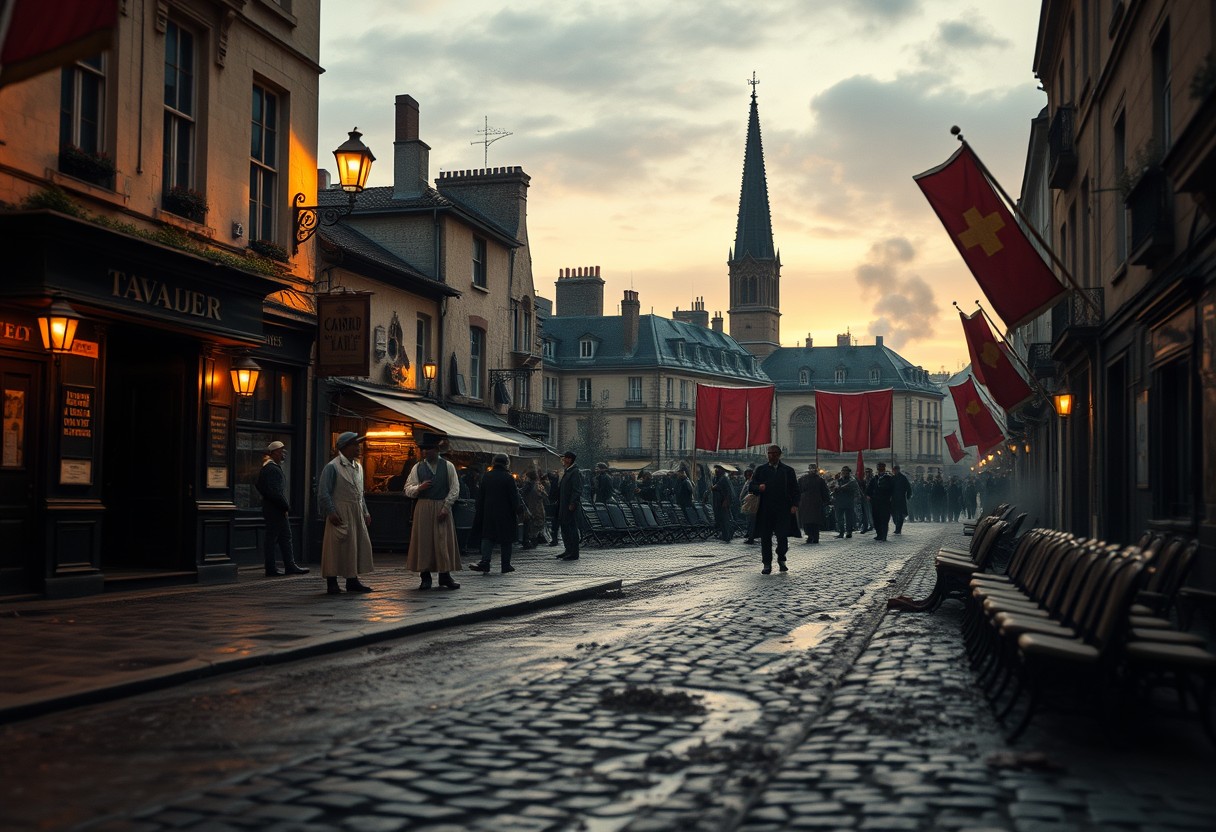
You hear it before you feel it-a low tremor in the strings that swells like breath returning to a long-stilled body. The overture of *The Phantom of the Opera* doesn’t begin so much as emerge, dragging echoes from beneath the floorboards of memory. It’s not just music; it’s invocation. Each note carries the weight of gaslit corridors and velvet drapes heavy with dust, summoning the spirit of the Palais Garnier with a symphonic reverence that borders on séance. You’re not merely listening-you’re stepping into a world where architecture breathes and marble remembers every whisper.
Time folds as the auctioneer calls out lots by lamplight, his voice slicing through the haze. A cracked music box, a painted backdrop, a chandelier missing its sparkle-each object pulses with unseen history. These aren’t props but relics, charged with stories too deep for words. When the gavel falls, it feels less like commerce and more like exhumation. You lean forward, caught in the quiet drama of rediscovery, as if each bid pulls another thread from the past.
There’s something sacred in the way the orchestra holds its breath between phrases, as though even the musicians are afraid to disturb what rests below. This isn’t spectacle for spectacle’s sake-it’s remembrance dressed as performance. You sit in the dark, surrounded by ghosts you’ve never met but somehow know by heart.
Echoes of the Palais Garnier
Stone remembers. Even when the footlights dim and the audience thins, the Palais Garnier keeps its secrets close, tucked behind mirrored walls and winding staircases. You can hear them in the overture’s opening strains-fragments of aria, half-remembered waltzes, the distant echo of a soprano lost to time. These aren’t random sounds; they’re memories trapped in melody, surfacing like ripples from a stone dropped decades ago. The score becomes a map, tracing hallways only the heart can navigate.
Each instrument seems to speak for a different corner of the opera house-the cellos for the catacombs, the flutes for the rafters, the harp for the grand staircase where silk skirts once whispered against marble. You close your eyes and see it all: gilt peeling under candle smoke, shadows stretching longer than any man could cast. There’s sorrow in the brass, longing in the woodwinds, and in the violins, something dangerously close to love.
You’ve never walked those halls, yet you recognize them. Maybe it’s the way the music lingers just a beat too long on certain notes, as if waiting for someone to answer. Or how the silence between movements feels occupied, like a room still warm from a recent departure. The overture doesn’t just set the mood-it resurrects the building itself, brick by haunted brick.
The Chandelier’s Resurrection
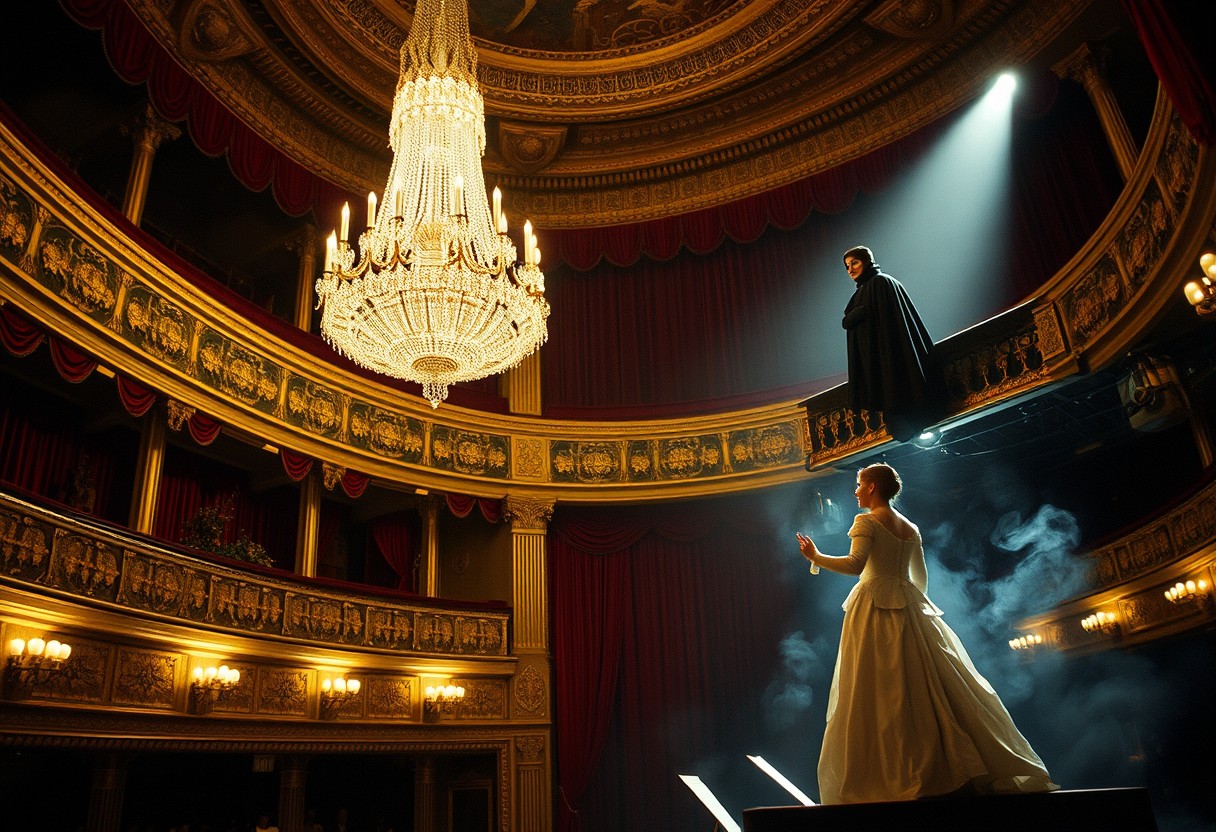
Light returns with a shudder. The chandelier, dormant for years, begins its ascent in sound before it does in sight. You feel it first in the rising tension of the strings, a slow ignition that climbs through your chest like heat. Then comes the crash-not just of glass and iron, but of memory made real. The overture rebuilds the moment before disaster, letting you stand suspended in the breath before the fall.
It’s not mere spectacle; it’s resurrection. The music doesn’t just recall the chandelier’s plunge-it restores its presence, its menace, its beauty. You watch it in your mind’s eye, glowing above an oblivious crowd, unaware of the fury hidden in the flies. Every shimmer is scored with precision, every flicker matched to a flutter in the orchestra. It becomes a character, not just a fixture.
When the final chord strikes like a match, you blink as if dazzled. The chandelier hangs once more, not in the theater above, but in the space between sound and imagination. You’re left staring upward, half expecting sparks to rain down.
Think of Me and the Angel’s Whisper
Christine Daae’s voice on opening night carries something new-less shyness, more certainty. When she sings “Think of Me,” it isn’t just a farewell to Raoul or a plea for remembrance; it’s her first true step into the spotlight as someone more than a chorus girl. The notes float with delicate control, each phrase shaped like a promise. You can hear the shift in her tone: no longer hiding behind others on stage, she lets her voice rise with quiet confidence. This moment feels tender but charged, as if music itself is pulling her toward a destiny she doesn’t yet understand. The audience may believe they’re hearing a sweet goodbye, but you recognize it as an awakening.
There’s a softness in how she lingers on certain words, almost like she’s testing her own power. Her delivery wraps vulnerability and strength in the same breath, making the song feel intimate even in a grand theater. You’ve seen performers play this part before, but Christine makes it personal-like every line is pulled from a private diary. Even without knowing what waits beneath the opera house, you sense that something deeper is unfolding through her voice alone. It’s not fame she’s chasing in this aria, but identity. And in those rising scales, you catch the first real glimpse of who she will become.
The whisper that follows-“I’m here, the Angel of Music”-isn’t just a theatrical effect. It slips through the silence like a secret meant only for her, yet you hear it too, clear and close. This voice from nowhere speaks with calm authority, calling her by name as if it has always known her. You lean in, caught between disbelief and wonder. Is it illusion? Faith? Or has some unseen presence truly been waiting? The way it blends with the fading echo of her song blurs the line between teacher and phantom, guide and ghost. Most would dismiss it as fancy, but you know better-something has shifted. Christine isn’t just singing anymore. She’s being answered.
The Triumph of the Chorus Girl
You’ve watched chorus girls come and go-faces lost in the crowd, voices blended into background. But Christine doesn’t disappear into the ensemble. When she steps forward to sing “Think of Me,” it’s not because someone pushed her there. She rises because the music demands it, and so do you. There’s a purity in her tone that cuts through the noise, not with force, but with clarity. You notice how her hands tremble slightly at first, then still as she finds her center. This isn’t luck or favoritism-it’s talent stepping into its rightful place. The applause that follows isn’t just polite; it’s surprised, delighted, a little stunned. Even Carlotta’s supporters can’t deny it.
The role was meant for another, everyone knows that. Yet when Christine finishes, the manager’s decision suddenly makes sense. You see it in the way patrons lean forward, asking, “Who *was* that?” Their curiosity is no longer about scandal or substitution-it’s about *her*. This moment doesn’t erase the hierarchy of the opera house, but it cracks it open just enough. A girl once tucked behind the prima donna now stands where the spotlight lands brightest. You don’t need grand declarations to feel the shift. It’s in the hush before the clapping, in the way Raoul smiles like he’s remembering childhood melodies. Something real just happened, and no amount of backstage politics can un-sing that truth.
What makes this triumph linger isn’t just the applause, but what lies beneath it-the sense that she earned this not by ambition, but by surrender. She didn’t fight for the spotlight; she simply let the music move through her. That honesty resonates. You’ve seen performers belt their lungs out for attention, but Christine wins hearts by staying soft, by letting the song speak. It’s a different kind of power, one that doesn’t shout but echoes. Days later, people aren’t just humming the tune-they’re wondering about the singer. And that quiet girl who once vanished into the chorus? Now, she’s the one they can’t forget.
The Voice in the Dressing Room
After the curtain falls, the theater quiets, but you know the real magic hasn’t ended-it’s just changed form. Alone in her dressing room, Christine hears it again: that voice, smooth and low, speaking directly to her. It calls her by name, not as a performer, but as a pupil. You hold your breath, not sure whether to believe it’s real or imagined. There’s no figure in the mirror, no shadow in the corner-just sound, impossibly close. It tells her she has done well, praises her voice like a long-absent father might praise a child’s first drawing. The warmth in its tone feels genuine, even protective.
You’ve heard stories of muses and mentors appearing in dreams, but this is different. The voice doesn’t come in sleep-it arrives in waking silence, clear and present. It claims to be her Angel of Music, sent by her late father. Whether you believe in angels or not, the effect is undeniable. Christine listens not with fear, but recognition, as if some buried memory has finally surfaced. The way she closes her eyes, nods gently-you see trust forming in real time. This isn’t manipulation, not yet. To her, it feels like reunion. And you begin to wonder: could grief shape a voice? Could love echo beyond death?
What strikes you most is how natural it all seems. No dramatic lighting, no thunderclap-just a young woman standing still, listening to whispers only she can hear. Yet everything changes in that stillness. The voice doesn’t demand; it invites. It doesn’t command; it comforts. And in doing so, it draws her deeper into belief. You don’t know where this path leads, but you feel its beginning in the hush of that room. One conversation, one whispered affirmation-and Christine is no longer just a singer who had a good night. She’s someone chosen, guided, seen. And that changes everything.
The Mirror and the Music of the Night
He takes your hand, not with force but with a quiet certainty that makes resistance feel like betrayal. The mirror swings open, revealing a passage that shouldn’t exist-one moment you’re in a dressing room, the next you’re stepping into darkness, guided only by the warmth of his grip and the echo of his breath. The air grows cooler, tinged with the scent of damp stone and candle wax, as if the opera house has a hidden body beneath its grandeur. This descent isn’t just physical; it’s an invitation to surrender logic, to let sensation lead. The world above-the rehearsals, the applause, the politics-fades behind you like a half-remembered dream.
Your heartbeat syncs with the rhythm of unseen water as he whispers promises wrapped in melody. There are no demands, only suggestions: *Close your eyes, let your mind start a journey…* His voice doesn’t command-it caresses, winding through your thoughts like smoke. Candles flicker to life along the walls, their flames suspended in midair, defying explanation. You don’t question how they stay lit or why the boat appears so silently on the black water. Logic dissolves here. This is a place built on feeling, where music becomes touch and shadows feel alive.
You begin to understand that this isn’t about performance or training anymore. It’s about transformation. He doesn’t want a student-he wants a soul tuned to his frequency. Every note he sings pulls you deeper, not into fear, but into fascination. You feel yourself softening, opening, as if your very identity could dissolve into the song. Resistance feels petty now. Why fight beauty that knows your name before you do?
The Voyage across the Lake
A small boat glides forward without oars, drawn by something unseen beneath the still surface. You sit close to him, close enough to see the mask’s edge press slightly into his cheek, yet you don’t look away. The cavern stretches around you, vast and cathedral-like, its ceiling lost in shadow. Water laps gently against the hull, the only sound besides his breathing and the distant hum of the underground. It feels less like travel and more like drifting through a dream you’ve had before but never remembered until now.
Candles line the shore ahead, their golden light rising from iron sconces embedded in rock. They form a path, not just across water but through time-each flame a marker of devotion, of secrecy, of longing given shape. You notice how carefully he moves, almost reverently, as though this space is sacred. The silence between words speaks louder than any aria. You catch glimpses of carvings on the walls: musical notes, names etched in French, roses worn smooth by years of unseen fingers.
This journey isn’t meant to frighten. It’s meant to enchant. With every ripple, the outside world loses its grip. You’re not being taken somewhere-you’re being welcomed into a truth too delicate for daylight. When the boat finally touches the shore, you realize you didn’t just cross water. You crossed a threshold.
The Seduction of the Soul
His voice wraps around you before words even form, low and intimate, like a secret meant for one listener. *Nighttime sharpens, heightens each sensation…* Each syllable lingers, drawing out the space between breath and desire. You feel the vibration in your chest, as if the music isn’t just heard but absorbed through skin. There’s no stage here, no audience-just two figures in candlelight, one offering everything, the other trembling on the edge of acceptance.
He doesn’t ask you to love him. He asks you to listen. To feel. To imagine a life where music isn’t performed but lived, where every heartbeat echoes a symphony only you can hear. The boundaries between teacher, composer, and phantom blur. You begin to wonder if he’s showing you his world-or reshaping yours. A single rose rests at the piano, tied with black ribbon, already part of the ritual.
Resistance feels like denial now-not of a man, but of a destiny whispered in every note. When he sings *turn your face away from the garish light of day*, you find yourself leaning closer, not away. Not because you’re afraid, but because something inside you recognizes the dark as home.
Notes and the Prima Donna’s Fall
Every note the Phantom leaves behind carries more weight than a simple message-it’s a challenge to the entire order of the opera house. You feel it in the hushed whispers of stagehands and the nervous glances between managers. His demands, scrawled in red ink, don’t just request changes-they expose the fragile ego that props up the glittering surface of artistic prestige. The opera thrives on hierarchy, with the lead soprano at its peak, but the Phantom’s letters remind everyone that fame is as thin as stage paint. When he insists on Christine singing, he isn’t just promoting talent-he’s dismantling the illusion that status is earned solely through visibility. You begin to see how easily the spotlight can shift, and how quickly reverence turns to resentment when power is questioned.
The cast and crew once treated Carlotta’s diva behavior as part of the show’s rhythm, an expected rhythm of tantrums and triumphs. Now, her dominance feels less like artistry and more like entitlement, laid bare by the Phantom’s quiet, persistent interference. His notes don’t shout-they calculate. Each one chips away at the assumption that volume and fame guarantee control. You notice how the chorus girls exchange knowing looks when Carlotta storms offstage, no longer awed but quietly amused. The Phantom may lurk in shadows, but his influence plays out in full view, turning backstage politics into a public reckoning. Even the managers, fumbling with their scripts and schedules, can’t ignore that something deeper is shifting-the old rules no longer hold.
What makes his presence so unsettling isn’t the threats, but the precision. He knows who matters, who’s replaceable, and exactly how to expose it. You can almost hear the tension in the air before each performance, thick with anticipation of what he’ll demand next. His notes aren’t just instructions-they’re commentary, a running critique of vanity masked as art. And in that critique, you start to wonder: how much of the opera’s grandeur is built on fragile egos rather than true talent? The Phantom doesn’t need to appear to command attention. His words do it for him, each one a needle piercing the inflated balloon of tradition and ego.
Demands of the Opera Ghost
His first note arrives like a whisper in a silent theater-polite, yet impossible to ignore. You read it not as a plea but as a decree: Christine Daaé will sing, Carlotta will not. There’s no negotiation, no explanation, just a calm assertion of will that unsettles everyone who hears it. The managers scoff at first, treating it as the rant of a disgruntled patron. But when the chandelier incident follows, you realize these aren’t random outbursts-they’re calculated moves in a larger game. The Phantom doesn’t ask for money or fame. He demands control over artistic choices, as if the opera’s soul belongs to him alone. His presence becomes a constant undercurrent, shaping rehearsals, casting, even the lighting cues, all from behind a veil of anonymity.
What’s striking isn’t just the boldness of his requests, but how they expose the hypocrisy backstage. You’ve seen Carlotta refuse to rehearse, heard her belittle younger singers, watched her manipulate directors with threats of illness. Yet the management tolerates it all-until the Phantom forces them to choose. His demands strip away the comfort of routine, making everyone confront what they’ve ignored for years. Christine, quiet and unassuming, suddenly stands at the center of attention not because of connections, but because someone with unseen authority believes in her. You begin to wonder if the Phantom isn’t just imposing his will, but revealing a truth the opera has long buried: talent often hides in silence, while noise is mistaken for greatness.
Each new note arrives with chilling precision, timed to coincide with moments of maximum tension. You notice how the stagehands now pause before opening a prop trunk, how the prompter glances toward Box Five before calling lines. The Phantom’s instructions aren’t just followed-they’re anticipated. He asks for specific lighting, exact tempos, even the placement of a single rose on Christine’s dressing table. These details aren’t arbitrary. They suggest an intimate knowledge of the theater, yes, but also a deep emotional investment. You start to see his demands not as acts of tyranny, but as expressions of a twisted devotion. He isn’t trying to destroy the opera-he’s trying to perfect it, in his own haunted way.
Carlotta’s Public Humiliation
The curtain rises on *Il Muto*, and Carlotta takes her place with her usual flourish, confident the audience is hers. You can see it in the way she adjusts her necklace, the practiced smile aimed at the front rows. Everything feels normal-until the first note. Her voice cracks, not from strain, but from something far more terrifying: an unseen force warping the sound itself. The audience murmurs, then laughs. She tries again, louder this time, but the distortion follows, turning her aria into a grotesque parody. You feel the shift in the air-a mix of horror and fascination-as the diva, once untouchable, is reduced to sputtering outrage on stage. This isn’t a mistake. It’s a message, delivered with surgical precision.
Backstage, the reaction is immediate. Dancers freeze mid-step. The conductor lowers his baton, unsure whether to continue. You notice Christine watching from the wings, her hand over her mouth, not in mockery but in dread. Carlotta’s humiliation isn’t just personal-it’s symbolic. For years, she’s treated the opera as her personal kingdom, dismissing understudies and dictating terms. Now, in front of the entire audience, her voice-the very source of her power-is turned against her. The laughter grows, not just from the crowd but from within the company. A chorus girl stifles a giggle. A tenor turns away to hide his grin. The hierarchy cracks in real time, and everyone feels it.
When she storms off, trailing feathers and fury, the show somehow goes on-with Christine stepping into the role. The transition is chaotic, but also electric. You hear the difference immediately: her voice is softer, less showy, but achingly sincere. The audience, still buzzing from the spectacle, leans in. This isn’t just a replacement-it’s a revelation. Carlotta’s fall isn’t merely the result of a prank. It’s the collapse of an era where volume and vanity ruled the stage. From this moment on, nothing feels certain. The diva’s crown has been knocked loose, and no one knows who might pick it up-or if it should be worn at all.
All I Ask of You and the Masquerade
Love promises shelter, and in “All I Ask of You,” that promise feels real. You hear it in the gentle swell of the melody as Christine and Raoul sing of protection, their voices intertwining like vows under moonlight. This isn’t just romance-it’s a quiet rebellion against fear, a declaration that tenderness can outlast terror. The song wraps you in the belief that devotion is enough to keep darkness at bay. For a moment, you let yourself believe they’ve escaped the Phantom’s shadow. The rooftop becomes more than stone and sky; it’s a private world where danger can’t reach.
Yet even as hope rises, the masquerade looms-a glittering trap disguised as celebration. Every ornate mask hides not just a face but a secret, and yours might be the only one unaware of what’s coming. The music pulses with false joy, strings dancing over a growing tension only you can feel. Laughter echoes too loudly, chandeliers shimmer too brightly. You know the Phantom won’t stay buried in silence. When he arrives, it won’t be quietly.
And then-there he is. No warning, no cue. Just the sudden stillness when everyone realizes the Red Death stands among them. Your breath catches. His presence isn’t just shocking; it’s personal. That crimson costume, the skull-like mask-it’s not theater. It’s a message carved in spectacle: *You thought you were safe. You were wrong.*
Sanctuary on the Roof
You’ve always imagined rooftops as places of escape, and here, high above the opera house, it finally feels true. The wind brushes your face as Christine and Raoul cling to each other, their voices soft but sure in “All I Ask of You.” This isn’t just a love song-it’s a lifeline. You lean into its warmth, letting the melody wrap around you like a coat on a cold Paris night. There’s something deeply human in their promise to protect one another, a simple courage that cuts through the opera’s mystery and dread. For once, the music isn’t laced with manipulation or longing-it’s honest, clear, and kind.
The harmonies rise without pretense, building a space where fear can’t follow. You close your eyes and almost forget the underground lair, the whispered threats, the way the Phantom’s voice seemed to come from everywhere and nowhere. Up here, sound travels differently. Laughter rings freely, footsteps echo plainly, and declarations of love aren’t twisted by echo or illusion. It’s a rare moment of emotional clarity in a story full of deception. You start to believe, really believe, that they’ve found a way out.
But safety, especially in this world, is never guaranteed. The very act of seeking refuge draws attention. And while you’re savoring the calm, the shadows below are shifting. A figure watches. A plan adjusts. The roof may feel distant, but nothing in this opera truly stays out of reach.
The Red Death’s Entrance
One second, the ballroom hums with champagne and chatter. The next, silence drops like a curtain. You feel it before you see him-the chill in the air, the way every guest freezes mid-step. Then, there he stands at the top of the stairs: the Phantom, robed in blood-red and black, a skull’s grin mocking the festivities. Your pulse jumps. This isn’t the hidden composer or the jealous mentor anymore. He’s transformed into something theatrical and terrifying, a living omen. The Red Death isn’t just a costume. It’s a statement written in fabric and fury.
No music announces him. His entrance is its own overture-slow, deliberate, impossible to ignore. You watch Raoul stiffen, Christine falter. Their sanctuary has been breached not by force, but by sheer presence. He doesn’t need to shout; his stillness speaks louder than any note. The masquerade, built on artifice and escape, now hosts its most dangerous guest. Every masked face suddenly feels complicit, as if the entire room has been caught in a lie.
And then, the line cuts through like a blade: “*Why so silent, good messieurs?*” His voice, cold and precise, turns the celebration into a courtroom. You realize this isn’t just a return-it’s a reckoning. The promise made on the rooftop hangs in the air, fragile and exposed. He has seen it, heard it, and now he means to break it.
The Point of No Return and the Final Lair
Every note in “The Point of No Return” tightens the coil of inevitability, drawing you into a performance where passion and manipulation blur beyond distinction. You feel the weight of expectation as Christine sings opposite Raoul, her voice steady but her heart torn. The mirrored stage becomes a trap, each reflection revealing another layer of deception. Erik uses music not just to seduce but to assert control, wrapping his longing in the guise of artistic perfection. The tango rhythm pulses like a heartbeat racing toward collapse, and when Christine removes his mask before the audience, it’s not just a reveal-it’s a rupture. The grandeur of the opera house gives way to silence, then chaos, signaling that there’s no stepping back from this moment. Even the orchestra seems to hold its breath as the curtain falls, knowing the real drama now moves underground.
You’re plunged into darkness as the chase through the catacombs begins, the music stripped bare to organ drones and echoing footsteps. The air grows damp, the tunnels narrowing like Erik’s fading hope. He drags Christine forward, not with brute force but with the gravity of years spent alone, composing love songs to a ghost of a woman he imagined her to be. When he finally confronts Raoul, dagger in hand, the choice isn’t just between two men-it’s between fear and forgiveness, possession and release. You can hear the tremor in his voice as he demands she stay, offering not just his life but his music, his soul. Yet it’s her quiet act-kissing him, truly seeing him-that cracks his fortress of rage.
The Performance of Despair
Song becomes survival in the final lair, where Erik turns his anguish into one last aria. You witness a man who has spent decades hiding not just his face but his need, now laying both bare. His voice wavers between fury and fragility as he forces Christine to choose, framing it as a test of loyalty but really begging for proof he’s worthy of love. The music swells with dissonance, resolving only when she steps forward-not to flee, but to touch his masked cheek. That small gesture undoes him more than any betrayal could. You realize it was never about keeping her; it was about being seen without horror. When he plays “The Point of No Return” on the pipe organ one final time, it’s not a reprise but a requiem-for his dreams, his illusions, himself.
The Choice in the Sewers
Water drips like a ticking clock as Christine faces the most intimate decision of the story. You feel the chill of the underground lake, the weight of silence after screams. Erik holds Raoul’s life in his hands, yet all he asks is whether she will stay with him willingly. This isn’t a villain’s ultimatum-it’s the plea of someone who finally understands love can’t be composed or conducted. When she kisses him, it’s not romance but revelation: compassion as liberation. You see the exact moment his grip loosens, not because he’s defeated, but because he’s been given something real. He releases Raoul, tells them to go, and vanishes into shadow with only his music box left behind. The final notes aren’t triumphant, but tender-a lullaby for the boy he once was, and the man no one ever stayed to love.
Final Words
You’ve followed the haunting melodies from the very first note to the final chord, tracing the Phantom’s sorrow, obsession, and fleeting hope. Each song built a bridge between his hidden world and the grandeur of the opera house, letting you glimpse the man behind the mask. The journey wasn’t just about music-it was about longing, identity, and the ache of being unseen.
You felt the tension rise with the chandelier’s glow, the romance bloom in quiet corners, and the drama unfold behind gilded masks. The score carries you through every twist, from tender promises to chilling ultimatums. Even when the stage clears and the lights dim, the echoes of “Down Once More” linger, leaving you caught between pity and unease. That’s the power of this story-it doesn’t offer easy answers, just raw, unforgettable emotion.
You don’t need to know every musical term to feel the weight of the final moments. The music speaks plainly, honestly, in ways words sometimes can’t. Whether you’ve loved this tale for years or just discovered it, its songs stay with you-not because they’re grand, but because they’re human. And that’s why, long after the curtain falls, you’ll still hear the Phantom calling.
FAQ
Q: What is the significance of the Overture in ‘The Phantom of the Opera’?
A: The Overture opens the musical with a slow, haunting version of the ‘Phantom’s Theme,’ setting a mysterious and melancholic tone. It mimics the sound of an old music box and gradually builds into a full orchestral arrangement, symbolizing the awakening of memories. The piece transports the audience to the Paris Opera House in 1881, where an auction of theatrical relics is underway. This musical introduction acts as a bridge between past and present, preparing listeners for a story rooted in memory, loss, and obsession.
Q: How does the music evolve from ‘Think of Me’ to ‘The Music of the Night’?
A: ‘Think of Me’ begins as a light, classical-style aria sung by Christine during a rehearsal, reflecting her innocence and emerging talent. Its melody is sweet and restrained, fitting the operatic world of the stage. In contrast, ‘The Music of the Night’ is darker and more hypnotic, introduced when the Phantom takes Christine to his underground lair. The shift in tempo, harmony, and instrumentation-from bright strings to deep, pulsing chords-mirrors Christine’s journey from the public world of performance to the private, seductive world of the Phantom’s influence.
Q: What role does ‘All I Ask of You’ play in the story’s emotional arc?
A: ‘All I Ask of You’ is a romantic duet between Christine and Raoul that marks a turning point in the narrative. Sung on the rooftop of the opera house, it expresses their love and desire for a normal life together. The melody is tender and sweeping, contrasting sharply with the Phantom’s more intense and possessive themes. When the Phantom overhears the song, it deepens his sense of isolation and fuels his jealousy, setting the stage for his increasingly desperate actions in the second act.
Q: Why is ‘The Point of No Return’ such a pivotal moment in the performance?
A: ‘The Point of No Return’ is a seductive tango duet performed on stage within the story, where Christine and the Phantom sing together during the fictional opera ‘Don Juan Triumphant.’ The lyrics blur the line between performance and reality, suggesting Christine may be yielding to the Phantom’s influence. The music builds with escalating tension, mirrored by the audience’s growing unease. For Raoul, watching from the wings, the scene feels like a loss of Christine, making it the emotional climax before the final confrontation in the underground lair.
Q: How does the music tie together in ‘Down Once More’ and the finale?
A: ‘Down Once More’ combines multiple recurring themes as Raoul descends into the Phantom’s lair to rescue Christine. The orchestration weaves in fragments of ‘The Phantom’s Theme,’ ‘All I Ask of You,’ and ‘The Music of the Night,’ creating a musical tapestry that reflects the convergence of characters and emotions. When Christine offers herself in Raoul’s place, her act of compassion disarms the Phantom, who releases them and disappears, leaving behind only his mask. The final notes echo the Overture, closing the circle and reinforcing the story’s themes of memory, sacrifice, and unresolved longing.
Curious about forex — without risking real money first?
XM offers a free demo account so you can practice trading with virtual funds before deciding whether live trading is for you.