

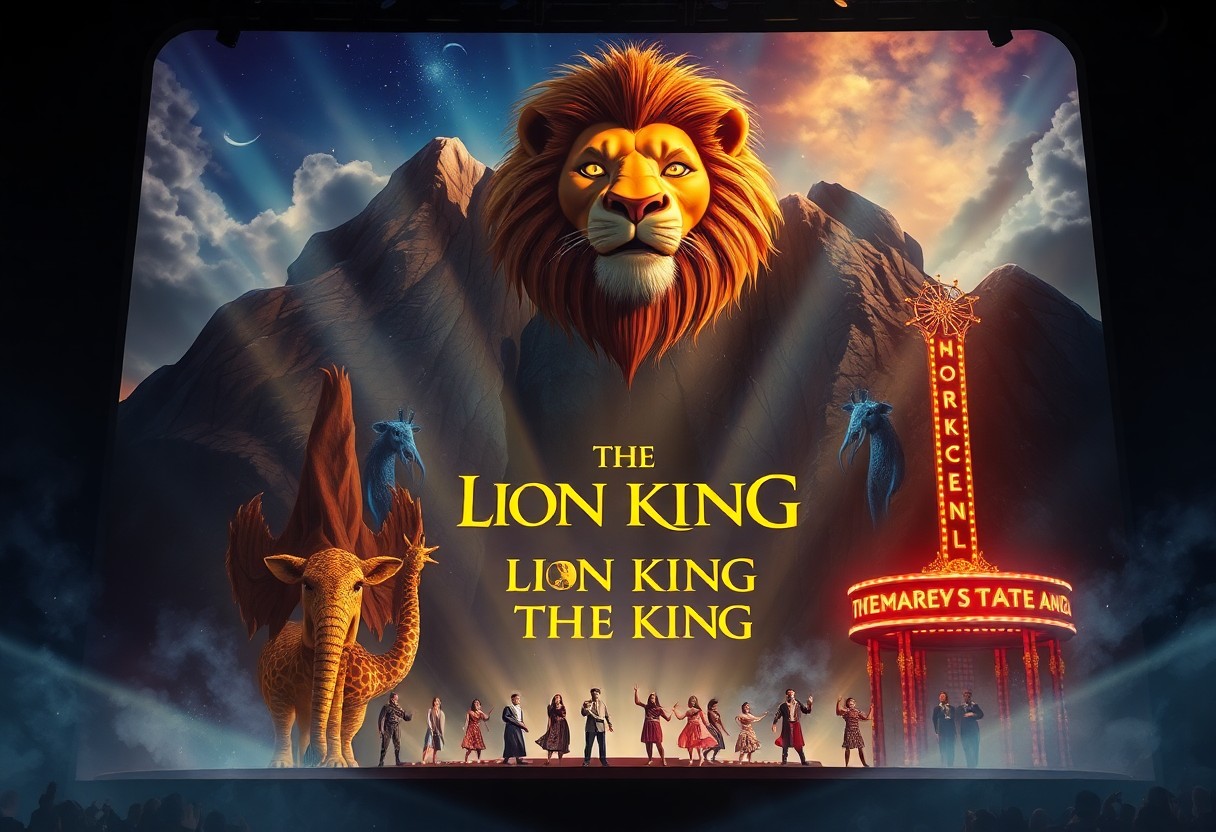
Over 25 years, The Lion King has redefined what a stage musical can achieve, transforming a beloved animated film into a theatrical phenomenon seen by more than 110 million people worldwide. You experience its impact not just through music and story, but in the groundbreaking puppetry and cultural authenticity that set a new standard for Broadway productions.
Key Takeaways:
- The musical’s record-breaking run of over 25 years at the Minskoff Theatre reflects its sustained appeal, outlasting many contemporary productions and becoming a cultural touchstone for multiple generations.
- Julie Taymor’s groundbreaking direction and costume design redefined Broadway aesthetics, introducing puppetry and global theatrical traditions in a way that made the stage animals feel alive without concealing the performers, a technique later studied in theater programs worldwide.
- Global expansion played a major role in its success, with productions in over 20 countries and translations into multiple languages, including a Japanese run that surpassed 10,000 performances, demonstrating its cross-cultural resonance.
Critical Factors Behind the Musical’s Global Success
- Julie Taymor’s groundbreaking direction redefined stage storytelling
- Authentic African rhythms rooted the production in cultural truth
- Visual spectacle combined with emotional depth broadened audience appeal
Knowing how these elements converged explains why the show resonated across continents and endured for decades.
Sending money abroad?
Wise makes international transfers cheaper than most banks — real exchange rates, low fees, and a free debit card option in many countries.
Need social posts without the grind?
Holo turns one idea into reels and photo posts with AI — useful if you promote shows, reviews, or fan content and want more output with less editing time.
Julie Taymor’s Visionary Direction and Artistry
Her use of puppetry and symbolic masks allowed actors to embody animals without losing human expressiveness. The antelope headdress in the opening procession, for instance, lets the performer’s face remain visible while suggesting the animal’s form. This duality became a signature of her style and elevated the production beyond typical adaptations.
The Integration of Authentic African Rhythms and Choral Arrangements
Traditional South African choral harmonies and polyrhythmic drumming grounded the score in cultural authenticity. The ensemble’s call-and-response patterns during “Circle of Life” reflect actual Zulu vocal traditions. Knowing how deeply these elements were woven into the music reveals why the production felt both universal and distinctly rooted.
Composers collaborated with South African musicians to ensure rhythmic accuracy, incorporating instruments like the djembe and thumb piano into the orchestration. The chorus was trained in isicathamiya techniques, a style popularized by Ladysmith Black Mambazo, which emphasizes soft footwork and layered harmonies. These choices gave the score a resonance that transcended typical Broadway conventions.
Types of Innovations in Stagecraft and Costume Design
The production redefined theatrical design through puppetry, costume engineering, and scenic mechanics. Performers embodied animals using articulated masks while remaining visible, blending human expression with animal form. Julie Taymor’s direction introduced symbolic visuals that elevated storytelling. Thou, as an artist, recognize the fusion of culture, craft, and technology behind every movement on stage.
| Puppetry Integration | Life-sized giraffe puppets operated by actors in plain view |
| Costume Innovation | Layered designs allowing quick transformations mid-scene |
| Mask Mechanics | Lightweight, articulated masks enabling facial expressiveness |
| Scenic Automation | Rotating turntables simulating savanna migrations |
| Lighting Symbolism | Color shifts marking transitions between spiritual and physical realms |
Dual-Layer Storytelling through Puppetry and Human Performance
Actors perform as both characters and their animal counterparts simultaneously, creating a layered narrative. A single performer might voice a meerkat while manipulating a rod puppet, maintaining emotional presence through subtle gesture. The duality allows audiences to connect with both the human and symbolic elements of the story, enhancing thematic depth without dialogue.
Revolutionary Scenic Mechanics and Lighting Techniques
Moving platforms and automated set pieces simulate the vastness of the African plains within a confined stage. Lighting isolates characters during soliloquies using tight, warm spotlights against cool, expansive backdrops. These techniques create a dynamic sense of space and time, guiding focus without physical walls or curtains.
Rotating drum lifts beneath the stage floor enable seamless transitions between Pride Rock and the jungle. Overhead rigging systems deploy flying birds and falling stars with precision timing, synchronized to musical cues. The use of shadow projection during “Shadowland” conveys exile and danger through silhouette alone, proving that minimalism can carry maximum emotional weight.
A Step-by-Step Evolution from Screen to Stage
The journey from animation to live performance required meticulous planning and creative reinvention. Julie Taymor’s vision transformed a beloved film into a theatrical phenomenon by honoring its emotional core while expanding its artistic boundaries. Each phase of development prioritized authenticity and innovation, ensuring the stage version stood apart as its own landmark achievement.
| Development Phase | Key Action |
| Conceptualization | Julie Taymor reimagined animal characters through symbolic puppetry and cultural motifs |
| Script Adaptation | New dialogue and expanded character arcs added depth for adult audiences |
| Score Expansion | Elton John and Tim Rice wrote additional songs to deepen narrative progression |
| Rehearsal Process | Actors trained in African vocal techniques and movement disciplines |
| Technical Integration | Costumes and masks were engineered to allow full expression and mobility |
Reimagining the Animated Narrative for a Mature Audience
You deepen the story’s emotional weight by emphasizing themes of legacy and moral responsibility. Simba’s journey gains complexity through nuanced interactions with Rafiki and Mufasa, adding layers not fully explored in the film. The use of ritual and symbolism grounds the narrative in a more serious, almost mythic tone, making it resonate with adults as much as children.
Expanding the Score Beyond the Original Motion Picture Soundtrack
You introduce new musical numbers that advance character development and pacing. Songs like “Shadowland” and “Endless Night” give emotional depth to Nala and Simba, moments absent from the original film. The expanded score transforms the production from a stage replica into a richer theatrical experience.
Additional music allowed the creative team to explore underdeveloped storylines, particularly in the second act. “Shadowland,” performed by Nala, became a defining moment of agency and resilience, showcasing her determination to leave Pride Rock. The integration of African harmonies and rhythms into new compositions elevated the score beyond pop sensibility, grounding the musical in a cultural authenticity that set a new standard for Disney stage adaptations.
Pros and Cons of High-Budget Disney Adaptations
Bringing animated films to Broadway demands substantial investment, but the outcomes vary widely. While some productions achieve long-term success, others struggle under the weight of their own scale. The following table outlines key advantages and disadvantages inherent in these large-scale adaptations.
| Pros | Cons |
| Immense brand recognition drives initial ticket sales | Extremely high upfront production costs |
| Proven storylines reduce creative risk | Complex stage mechanics increase maintenance demands |
| Global marketing reach through Disney’s network | Limited creative freedom due to franchise expectations |
| Merchandising and licensing revenue streams | Long development timelines delay return on investment |
| Access to top-tier talent in casting and direction | Pressure to replicate film’s success can stifle innovation |
| Strong audience familiarity increases word-of-mouth appeal | High weekly running costs limit break-even potential |
| Potential for international touring and foreign productions | Overreliance on spectacle over narrative depth |
| Opportunities for cross-promotion with theme parks | Diminished returns if audience fatigue sets in |
Immense Brand Recognition and Commercial Stability
You benefit from immediate audience trust when launching a Disney property, as millions already associate the title with quality and emotional resonance. This widespread familiarity translates into faster sell-through during preview weeks and stronger advance sales, giving your production a critical financial buffer early in its run.
High Operational Complexity and Initial Financial Risk
You face steep technical demands, from animatronic animals to elaborate set transitions, requiring specialized crews and constant maintenance. These elements drive up both initial costs and weekly overhead, making profitability a distant milestone without sustained box office performance.
Running a high-budget Disney adaptation means managing intricate logistics night after night. A single malfunction in the wildebeest stampede sequence, for example, can disrupt an entire performance and trigger costly repairs. You must maintain a large, highly trained team just to keep the show operating at peak level, and even minor downtime risks damaging audience perception and future ticket sales.
Essential Tips for Producing a Long-Running Broadway Hit
- Invest in timeless storytelling that resonates across generations
- Collaborate with visionary directors who honor the source material while expanding its theatricality
- Allocate significant resources to costume innovation and practical stage effects
- Ensure cast longevity through structured understudy programs and vocal health protocols
- Build global scalability into choreography, language adaptation, and set design from day one
This foundation enables sustained artistic integrity across decades and continents.
Prioritizing Visual Spectacle Without Sacrificing Emotional Depth
Design choices must serve narrative truth, not overshadow it. The Lion King’s animal-inspired costumes allow performers to embody creatures while retaining human expressiveness, ensuring audiences connect with Simba’s journey. This balance between visual ambition and emotional clarity defines enduring productions.
Maintaining Consistency Across International Touring Companies
Standardized rehearsal protocols and certified staging supervisors ensure each performance aligns with the original Broadway interpretation. This preserves the integrity of choreography, vocal arrangements, and scene transitions regardless of location.
Replicating the emotional and technical precision of the Broadway original requires rigorous training regimens and continuous oversight. A mid-sized SaaS firm managing global deployments might rely on automated workflows, but theater demands human calibration-each international cast undergoes a minimum eight-week residency with original creative staff. This ensures every actor in every city delivers the same heartfelt rendition of “Circle of Life” audiences expect.
To wrap up
You experience the full impact of The Lion King’s success when standing in the theater, surrounded by an audience captivated decades after its debut. Your understanding of its longevity grows clearer when considering the seamless fusion of African rhythms, Julie Taymor’s puppetry innovations, and a narrative that transcends age and culture. A mid-sized SaaS firm might pivot quarterly, but this production has held steady, running over 10,000 performances on Broadway alone, a benchmark few shows ever reach.
FAQ
Q: How did The Lion King overcome initial skepticism about adapting an animated film for Broadway?
A: Early doubts centered on whether a story so closely tied to its animated visuals could translate to live theater. The turning point came with Julie Taymor’s involvement, as her background in avant-garde puppetry and international theater brought a fresh visual language to the project. Her use of shadow play, life-sized animal puppets, and actor-doubles-where performers embodied both human and animal forms simultaneously-created a layered theatrical experience. This approach not only preserved the essence of the original film but expanded its emotional depth, convincing producers and audiences alike that the story could thrive on stage.
Q: What role did music play in the show’s longevity compared to the original film?
A: While the film’s score by Elton John and Tim Rice provided a strong foundation, the stage adaptation expanded the musical landscape significantly. New compositions such as “Endless Night” and “Shadowland” gave secondary characters like Simba and Nala greater emotional arcs. The integration of African choral arrangements and rhythms, led by Lebo M, added cultural authenticity and sonic richness that distinguished the stage version. These additions allowed the music to carry narrative weight beyond nostalgia, contributing directly to the show’s ability to run for over two decades on Broadway.
Q: How has The Lion King influenced other Disney stage adaptations?
A: The success of The Lion King set a new benchmark for how Disney approached theatrical conversions. Unlike earlier adaptations that closely mirrored their source material, later productions like “Aladdin” and “Frozen” adopted Taymor’s principle of theatrical reinterpretation rather than replication. The use of non-traditional casting, stylized movement, and integrated puppetry became hallmarks of Disney’s stage identity. A mid-sized SaaS firm might measure scalability through server load, but for Broadway, The Lion King demonstrated that scalability also meant artistic innovation across global productions, with over 100 million people having seen the show in 20 countries by 2023.
Curious about forex — without risking real money first?
XM offers a free demo account so you can practice trading with virtual funds before deciding whether live trading is for you.